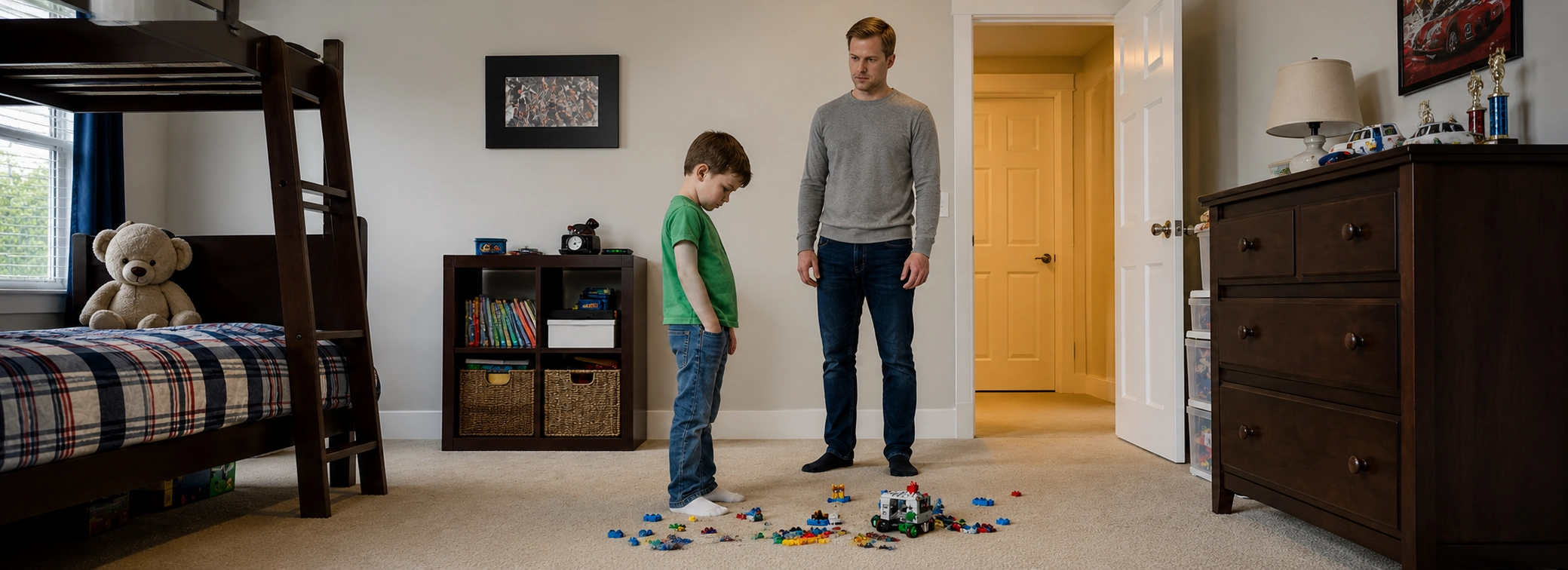
If your kid holds it together all day and then falls apart the moment you walk in from work. It is not about you, and it is not a sign of a problem. While you were gone, your kid managed without their safe person, and that managing quietly built up pressure. The instant you return, that pressure finally has somewhere safe to go, so it comes out all at once. The meltdown is not a complaint about your return; it is the release of everything they held together while you were away. The single most useful thing you can do is give the first five minutes to genuine, undivided attention, eye contact and real connection, before anything else.
You have been at work all day. You are tired. You are carrying your own emptied-out reserves from your own demanding day, and you walk through the door hoping for a moment, even a brief one, of ease.
Instead, within minutes, your kid has dissolved over something you cannot identify, while the person who was with them all day reports that everything was fine.
This is one of the most common and most misunderstood patterns in working-parent family life. It feels personal. It feels like a rejection, or a complaint, or proof that something about your relationship is strained. It is none of those things.
What is actually happening when you walk through the door
Your kid has been waiting for you. Not consciously, perhaps not even knowingly, but in their nervous system, quietly in the background of their day, the absence of their safe person has been a low-level presence.
In attachment research, the main caregiver is described as a “secure base”, the person whose reliable presence lets a kid face the challenges of the world. When that secure base is away, a kid's system runs under slightly higher pressure. They manage, often very well, but there is a hidden cost to all that managing.
When you come back, the pressure releases. The kid who was coping with the strain of your absence is suddenly in the presence of the very person whose return they needed, and everything that was held down by the effort of managing without you arrives at once. The meltdown is not a reaction to your return. It is the release of everything that was held together while you were gone. You are not the cause. You are the safe container it finally has somewhere to pour into.
 The kid who falls apart when you come home has been carrying the invisible weight of your absence all day.
The reunion response, why it happens and what it means
The reunion response is a well-documented pattern in attachment research. Across cultures, the return of a safe person after an absence brings out a distinct burst of behaviour in the kid, a release of built-up pressure, often with more emotional intensity than the length of the absence seems to explain.
In securely attached kids, this response is strong precisely because the bond is strong. A kid who does not much care whether their parent returns does not have a powerful reunion response; a kid who is deeply attached does. So the intensity of the reunion, the meltdowns, the clinginess, the tears, the seemingly out-of-nowhere upset, tracks the security of the attachment, not its weakness.
The kid who falls apart when you come home has been carrying the weight of your absence all day. The falling apart is not a complaint about you. It is what it looks like when that weight is finally allowed to come down.
Why the kid who was fine all day falls apart now
The carer who was there all day usually reports that the kid was fine, manageable, pleasant, not particularly difficult. And that is genuinely true. The kid managed. They drew on the self-control they had, they were helped by a caring adult, and they held themselves together well enough across the day.
But holding together is not the same as being fully settled. A kid managing without their safe person is managing on a slightly less stable base than a kid whose safe person is present. They can do it, kids do it all the time and are genuinely fine, but the managing has a cost, and the cost is paid at reunion. That is why “they were fine all day” and the homecoming meltdown are not a contradiction. They are two parts of the same process: managing across the day, and releasing at its end.
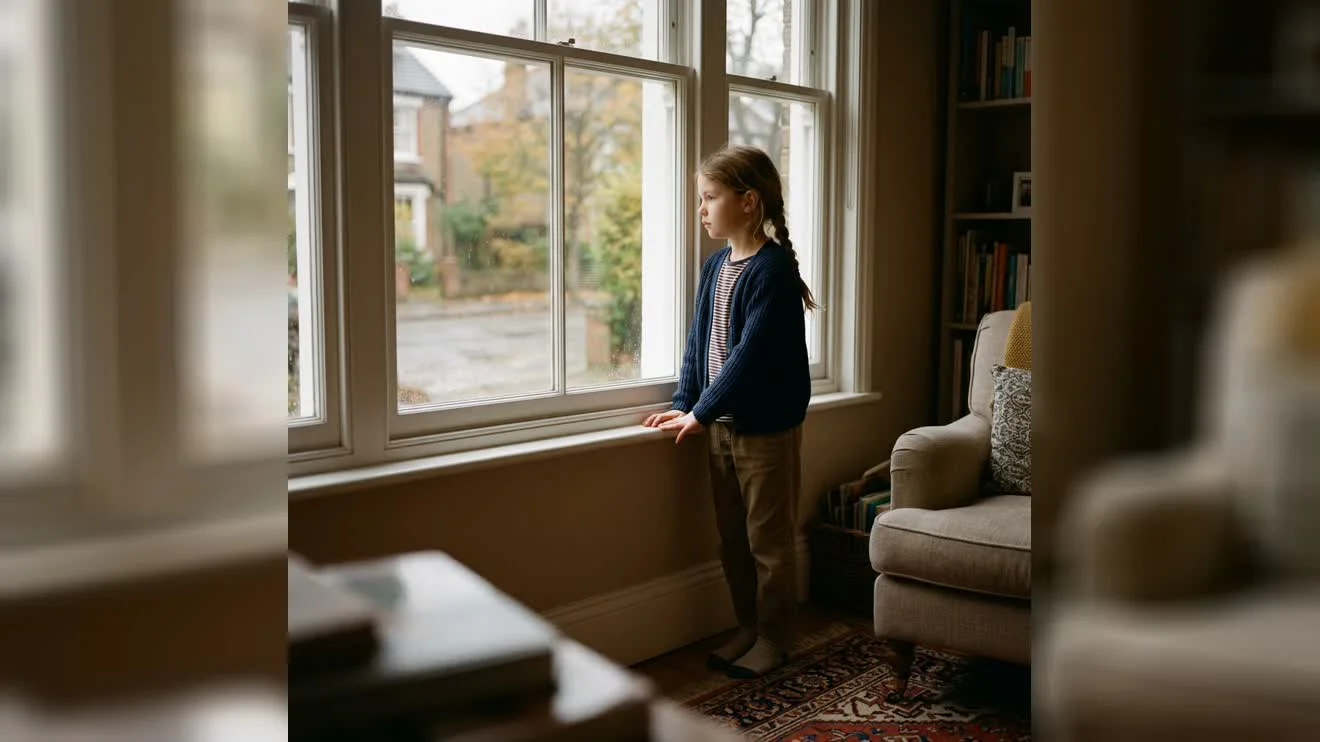 The meltdown is not a reaction to your return. It is the safe release of everything that was held together while you were gone.
What the first fifteen minutes actually decide
Research on family evenings points to the first fifteen minutes after reunion as the stretch that most strongly shapes the mood of the whole evening. A reunion that goes well, one that offers genuine reconnection before anything else, tends to produce a calmer, more connected evening. A reunion that begins with demands, corrections, or distraction tends to produce an evening that stays unsettled.
Those fifteen minutes carry so much weight because they set the tone. A kid who feels truly met and reconnected in that window gets some of their baseline calm restored. A kid who does not feel met starts the evening still carrying the weight of the day, plus the unmet need of the reunion on top.
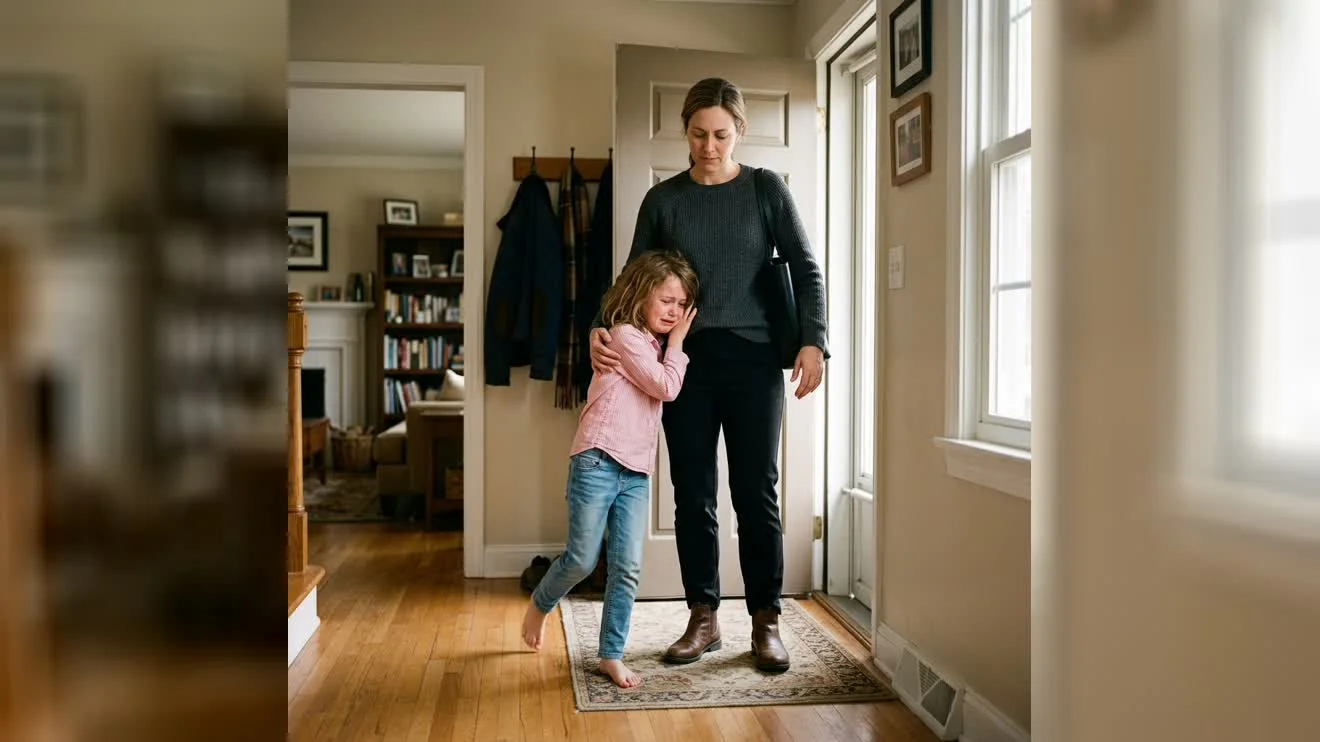 Five minutes of genuine, undivided, child-focused attention is not a large investment, but the return on it is huge.
Help Shape the Future of Active Learning
Join our exclusive Founding Member program. Get early access to new interactive modules, direct input into our product roadmap, and lifetime pricing options.
The reunion that helps, and the one that makes it worse
The reunion that tends to go well: you come home and give your kid your full attention for a brief but genuine moment, real eye contact, a real acknowledgement of them specifically, before you do anything else. You do not immediately start managing the house, checking your phone, sorting out logistics, or tackling whatever problem appears. You connect first, and everything else waits five minutes.
The reunion that tends to go badly: you come home carrying the unfinished business of your own day. You are pulled straight into the tasks of arriving, keys, bag, post, phone, and your kid's bid for connection gets lost in the bustle of the household reconvening. They escalate the bid because the first one did not land, the escalation feels demanding, and the evening starts on a back foot it never quite recovers from. Five minutes of genuine, undivided, child-focused attention is not a large investment, but the return on it, in the mood of the whole evening, is huge.
Is Your Kid's Screen Time Active or Passive?
Most screens capture a kid's attention without checking their understanding. Take our 2-minute diagnostic quiz to evaluate your kid's digital patterns, identify autoplay traps, and receive actionable insights to maximize active learning.
Start Screen Time & AI QuizWhat to do when you are also running on empty
The hard part of the after-work reunion is that it asks the most of you at the exact moment you have the least to give. You have also had a full day. You also arrive home drained. The request to offer warmth and calm lands when your own supply of both is at its lowest point.
There is no neat fix for this. It is genuinely hard. What helps most parents is naming it honestly to themselves: “I am running on empty too, and I am giving the first five minutes to this kid because I know what it produces.” The warmth does not have to feel effortless to be real. It does not have to come easily to be genuine. Your kid does not need you to arrive home restored and ready. They need you to arrive home and turn toward them first. The turning is the thing, and everything else follows from it.
 Your kid does not need you to arrive home restored and ready. They need you to arrive home and turn toward them first.
And if the reunion meltdowns ever feel far more extreme than this, last a very long time, or come with aggression or distress that worries you. It is always reasonable to check in. Your GP, paediatrician, or a child psychologist can offer a bit of extra support and peace of mind.
FOR PARENTS
Magical Moments on Aiino helps working parents stay connected across the day.
A personalised story you make, with your kid's name, their current interests, and your own knowledge of who they are right now, is there for them across the day, even when you cannot be. Magical Moments takes about fifteen minutes to create and can change the whole mood of reunion evenings. Built for kids aged 3 to 9. Zero ads. Zero tracking.
Research Citations
- [1]A secure attachment shows up not as fewer big feelings but as a kid who can recover from them when their caregiver returns (Obeldobel, Brumariu, & Kerns, Emotion Review, 2023). Emotion Review. View source →
- [2]The back-and-forth of parent and kid calming together, co-regulation, is how kids build the ability to settle themselves (Lobo & Lunkenheimer, Developmental Psychology, 2020). Developmental Psychology. View source →