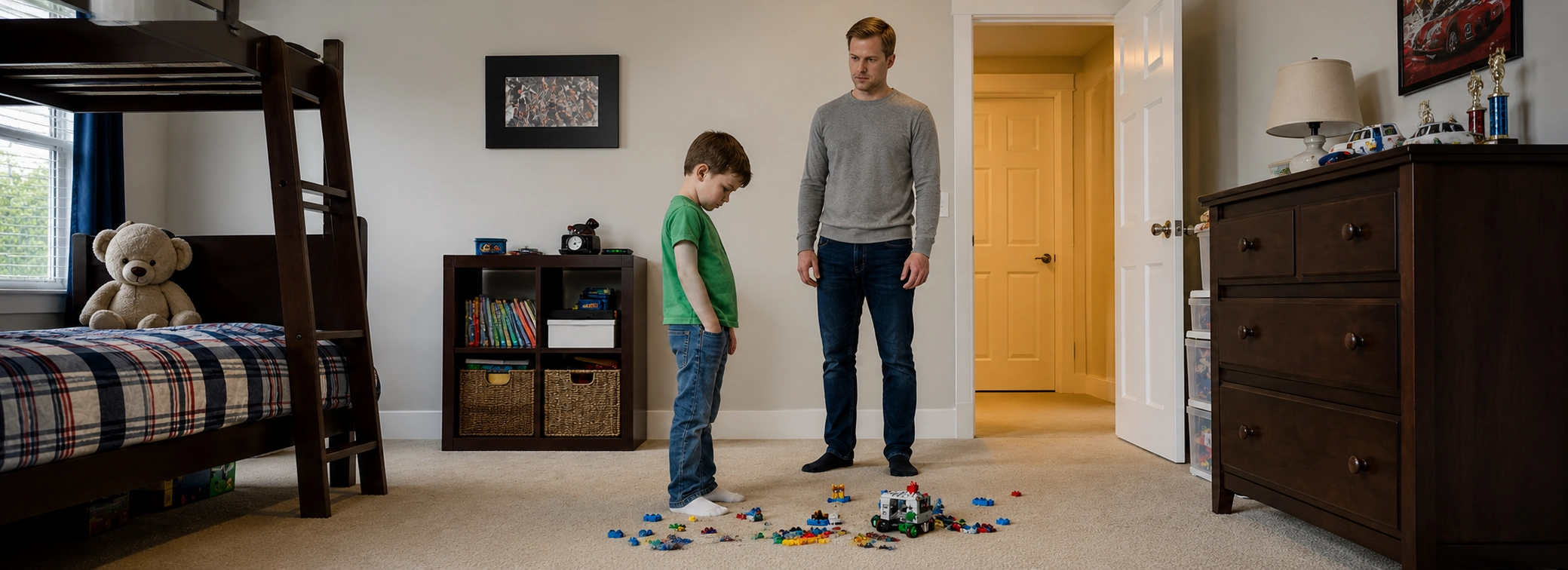
Most parents who yell do not want to yell. They have simply run out of everything else. The trouble is that yelling works in the moment for the wrong reason: it triggers your kid's alarm, and they comply out of fear, not understanding. Over time, regular yelling makes kids more reactive, not less, and it slowly wears down the relationship that all real behaviour change runs through. What actually works is discipline that is calm, consistent, aimed at the behaviour rather than the kid, and warm even while it is firm. Say the limit once, clearly, at your kid's level; follow through calmly; and reconnect afterwards. And when you do lose your temper, everyone does, repair it, because that is one of the most powerful things you can model.
Most parents who yell do not want to yell. They are not parents who believe yelling is good discipline. They are parents who have run out of everything else.
The yelling arrives not as a chosen strategy but as the bottom of an empty tank. It is drained by too many repeated requests, too many ignored instructions, the same behaviour happening again and again, and too little apparent effect from the calmer approaches tried first.
Understanding why those calmer approaches did not seem to work, and what actually does, is the foundation of discipline that works without blowing up.
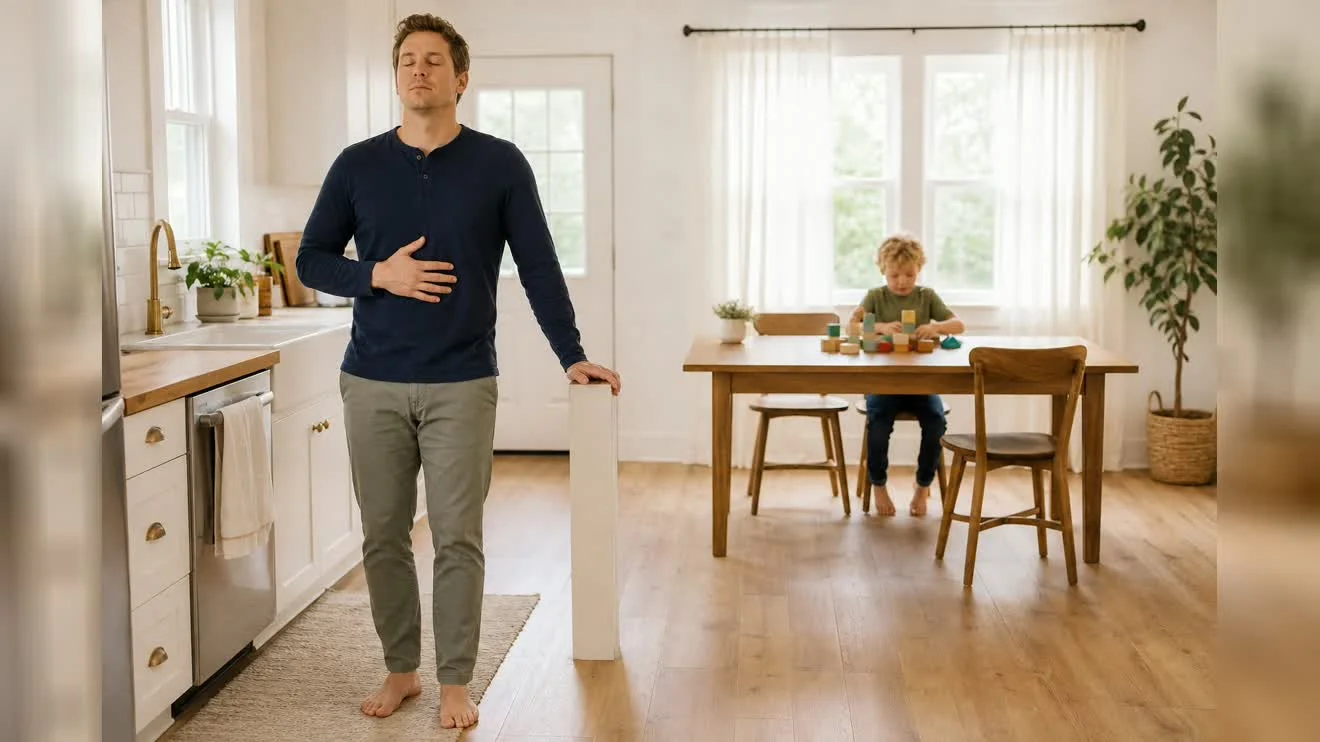 Yelling is what happens when the tank is empty, managing your own state first is where calm discipline begins.
Why yelling works in the short term and fails in the long term
Yelling works in the immediate moment because it sets off your kid's alarm, the brain's threat system fires, stress hormones release, and the body braces to respond. Compliance often follows, because going along with it is a fear response. But that short-term win comes with three long-term costs.
First, the alarm that produced the compliance is the very same system that produces the meltdowns. Setting it off again and again through yelling raises your kid's overall level of reactivity, so a kid who is regularly yelled at becomes more easily set off over time, not less. The discipline meant to produce better behaviour ends up creating the conditions for worse behaviour.
Second, compliance out of fear is not the same as compliance out of understanding. A kid who obeys because they are frightened has not learned anything about why the behaviour matters. They have learned that the adult gets loud and scary, and that going along with it makes that stop, a lesson that does not carry over to the many moments when the scary adult is not there.
Third, every yelling incident makes a small withdrawal from the relationship, the store of warmth and trust through which all real learning and behaviour change in kids happens. Enough withdrawals without matching deposits, and the account runs low. A kid who trusts less and feels less connected is harder to reach through any approach, including the positive ones.
Discipline that damages the relationship undermines its own effectiveness. The relationship is the channel through which all real behaviour change in kids happens.
What effective discipline actually looks like
The kind of discipline that produces real, lasting change in behaviour shares four features across the research.
It is calm
An adult who sets a limit from a calm state is more effective than one who sets it while worked up. Not because calm is kinder, but because calm is the state in which your kid can actually take in the message. The threat-response brain cannot learn. The calm brain can.
It is consistent
Inconsistency, enforcing a limit sometimes but not always, calmly one time and with a blow-up the next, teaches your kid that the limit is up for negotiation and that enough pushing or intensity will move it. A kid who has learned that enough protest shifts the limit will protest. A kid who has learned through steady experience that the limit does not move does not need to test it nearly as often.
It targets the behaviour, not the kid
It keeps the relationship intact
A limit can be firm without being cold. Warmth and firmness are not opposites, the most effective discipline holds both at once. “I love you, and this is not okay” communicates both without giving up either.
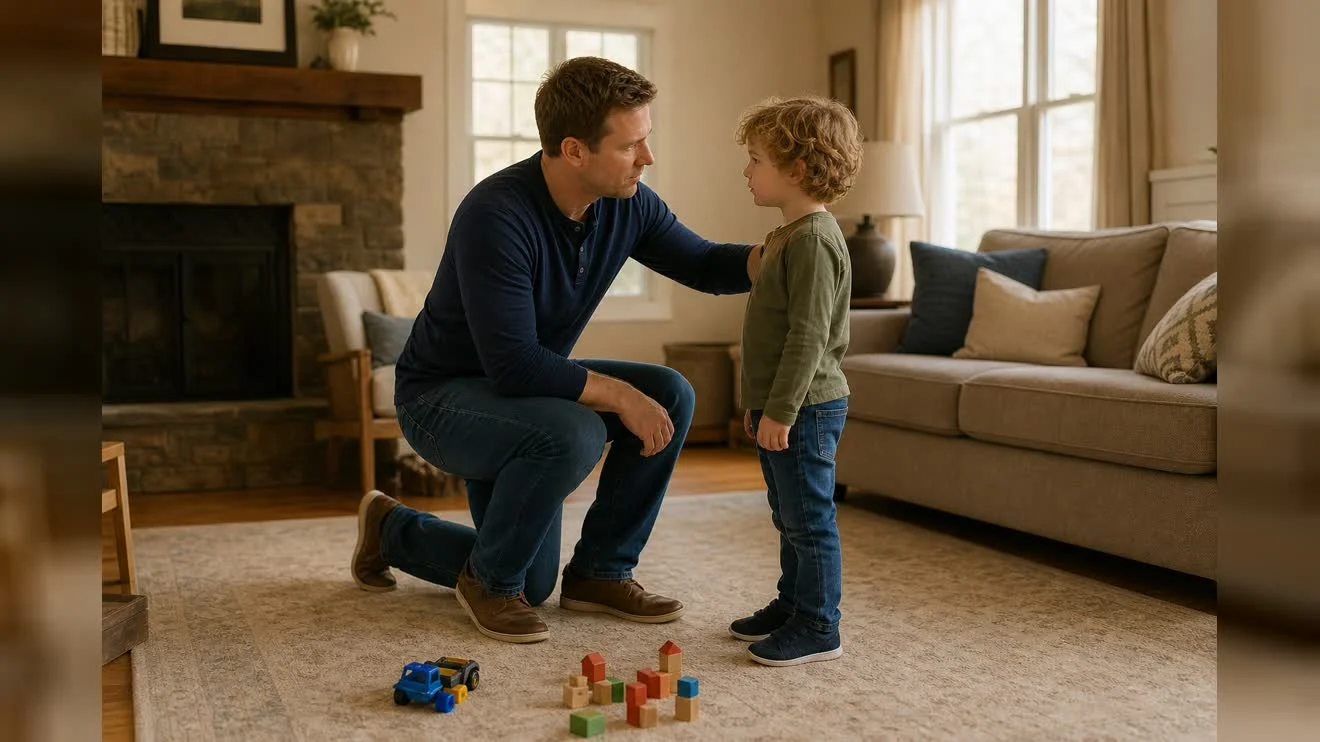 Calm, consistent, warm, and firm, discipline that your kid's brain can actually learn from.
Help Shape the Future of Active Learning
Join our exclusive Founding Member program. Get early access to new interactive modules, direct input into our product roadmap, and lifetime pricing options.
How to set limits that hold without escalating
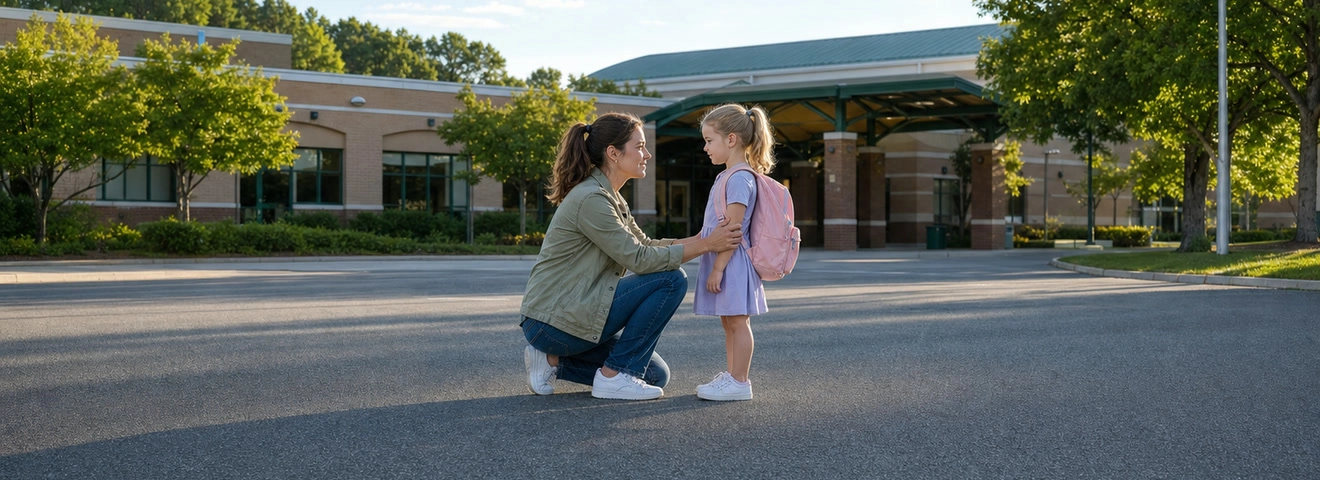
Say it once, clearly, at your kid's level. Not across a room, not as a warning to be repeated five times. Get close, get low, make eye contact, and say the limit once: “That is not okay. We do not hit.”
Then wait. The urge is to follow the instruction with repetition, explanation, and rising emphasis, but the instruction does not get more effective when you repeat it. It gets easier to ignore. Say it once and give it room to land.
If the behaviour continues, follow through with the consequence, calmly, without extra commentary. The consequence is the message; the lecture around it only waters it down.
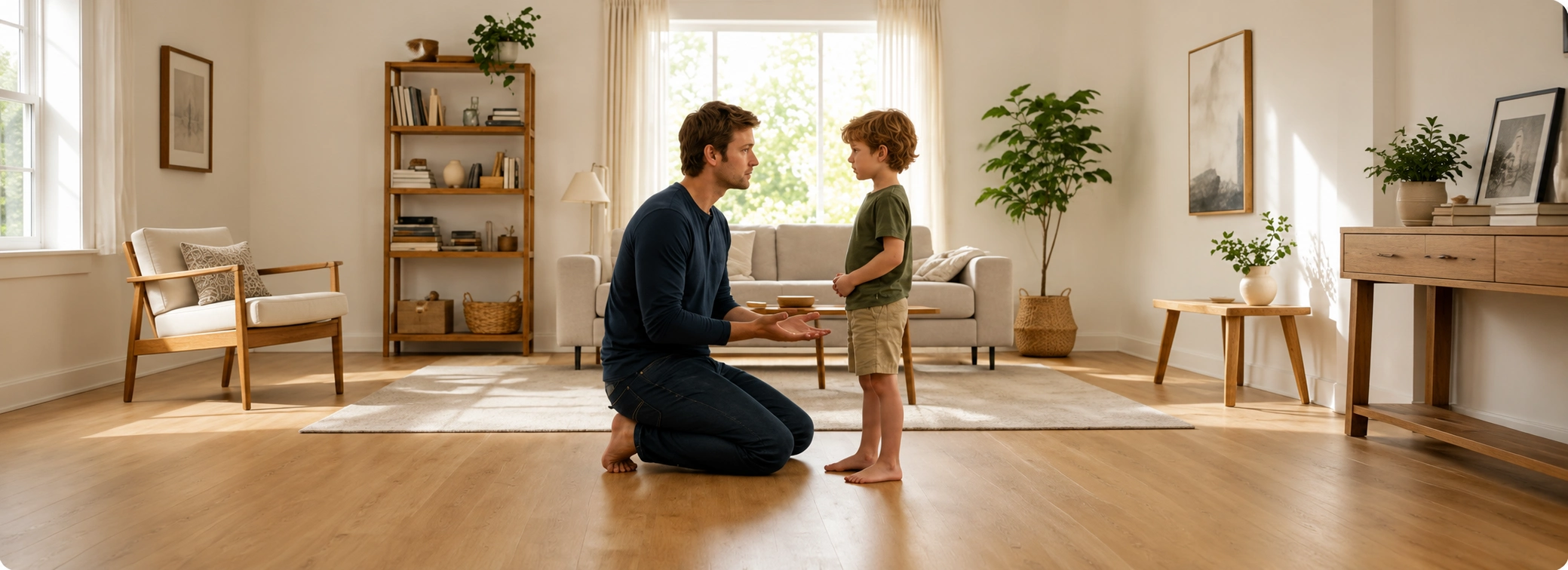
Once your kid is calm, come back to it briefly: “Earlier, when you hit your brother, that was not okay. We are going to work on finding words for when you feel like that.” Then reconnect. The limit has held, the relationship continues, and your kid has experienced both at the same time.
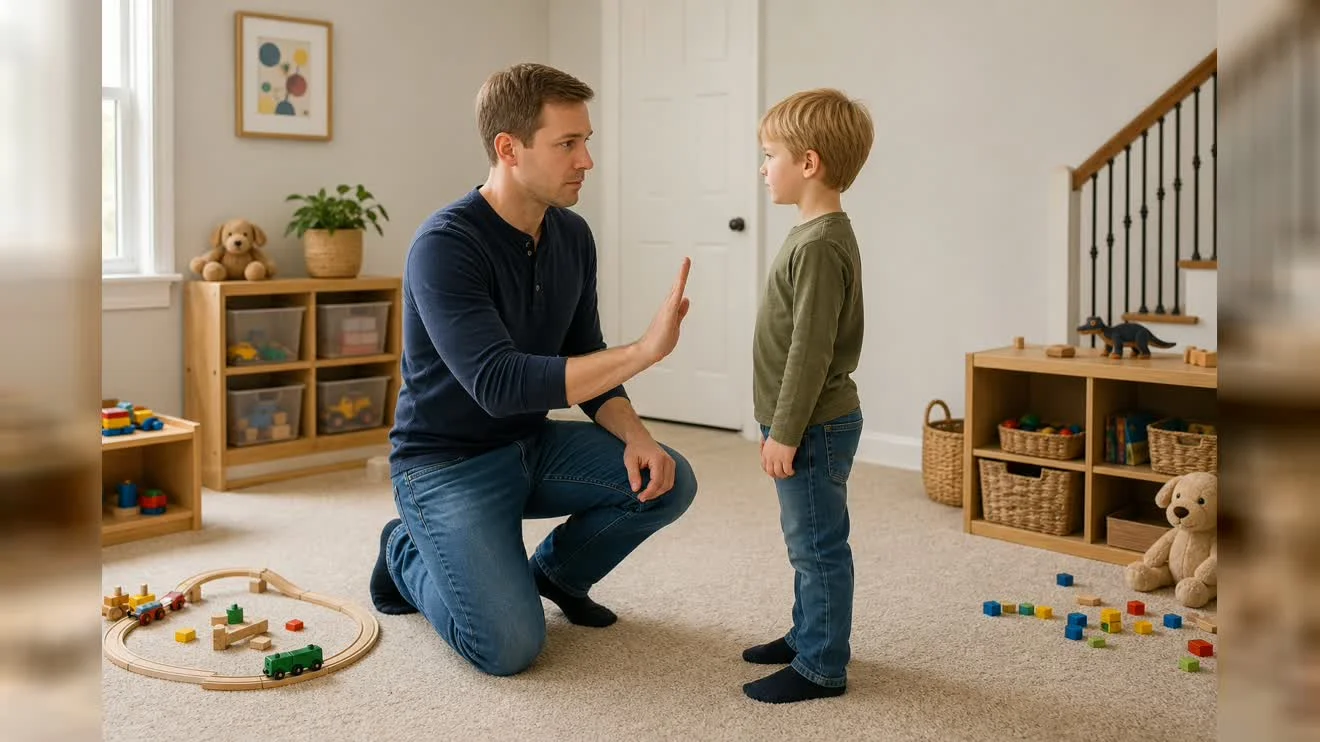 Say the limit once, at your kid's level, then follow through calmly without a lecture.
What to do when you have already yelled
Repair. Not self-punishment, a parent drowning in guilt over having yelled is not available to repair, because they are busy managing their own feelings instead of attending to the kid. Acknowledge it briefly, repair it, and move forward.
“I lost my temper earlier and I yelled. That was not okay of me. I am sorry, and I am going to work on doing better.” Said simply, without a flood of emotion, this models the exact thing we ask of kids after their own meltdowns: acknowledge, repair, continue. It is one of the most powerful discipline-related things a parent can do, and it shows your kid that everyone, including grown-ups, gets it wrong sometimes and can make it right.
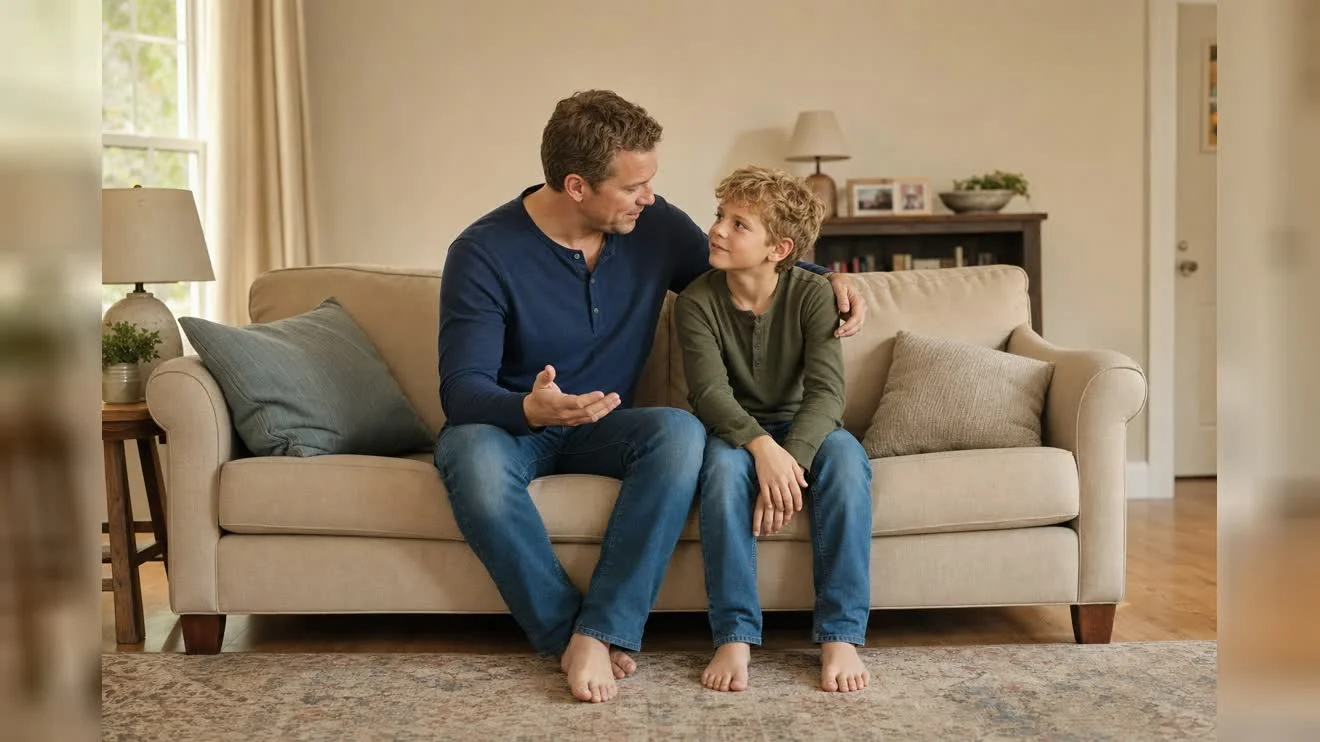 When you lose your temper, repair it, that is one of the most powerful things you can model.
Is Your Kid's Screen Time Active or Passive?
Most screens capture a kid's attention without checking their understanding. Take our 2-minute diagnostic quiz to evaluate your kid's digital patterns, identify autoplay traps, and receive actionable insights to maximize active learning.
Start Screen Time & AI QuizWhen to seek a bit more support
Calm, firm, consistent discipline works for the great majority of everyday behaviour, and it works even for more intense kids, it just takes more patience and repetition. Still, a few things are worth a chat with your GP, paediatrician, or a child psychologist. One is behaviour that is aggressive or dangerous in a way that feels beyond the everyday. Another is behaviour that is getting worse over time despite a calm, consistent approach. A third is behaviour that is seriously affecting friendships, learning, or family life. Reaching out early is not a sign of failure. It is a way to get the right support sooner.
FOR PARENTS
Activity Games on Aiino build the self-control that makes discipline easier.
A kid with stronger self-control, built through play that gently stretches it, has more room to hear, process, and respond to limits without blowing up. Activity Games build exactly these skills. Built for kids aged 3 to 9. Zero ads. Zero tracking.
Research Citations
- [1]Harsh verbal discipline, yelling, shouting, insults, predicts more behaviour problems over time, and a warm relationship does not cancel out the harm (Wang & Kenny, child development, 2014). child development. View source →
- [2]Warm repair after conflict between parent and kid helps young kids build stronger self-regulation skills (Kemp et al., Family Relations, 2016). Family Relations. View source →