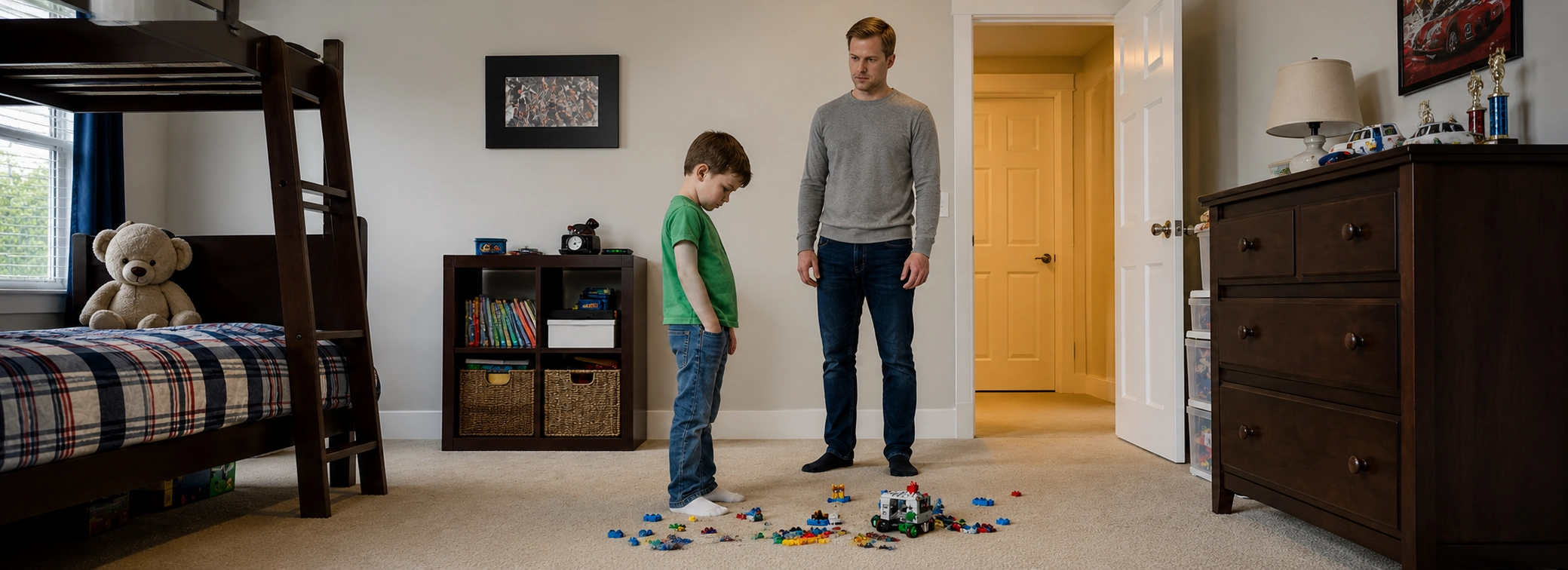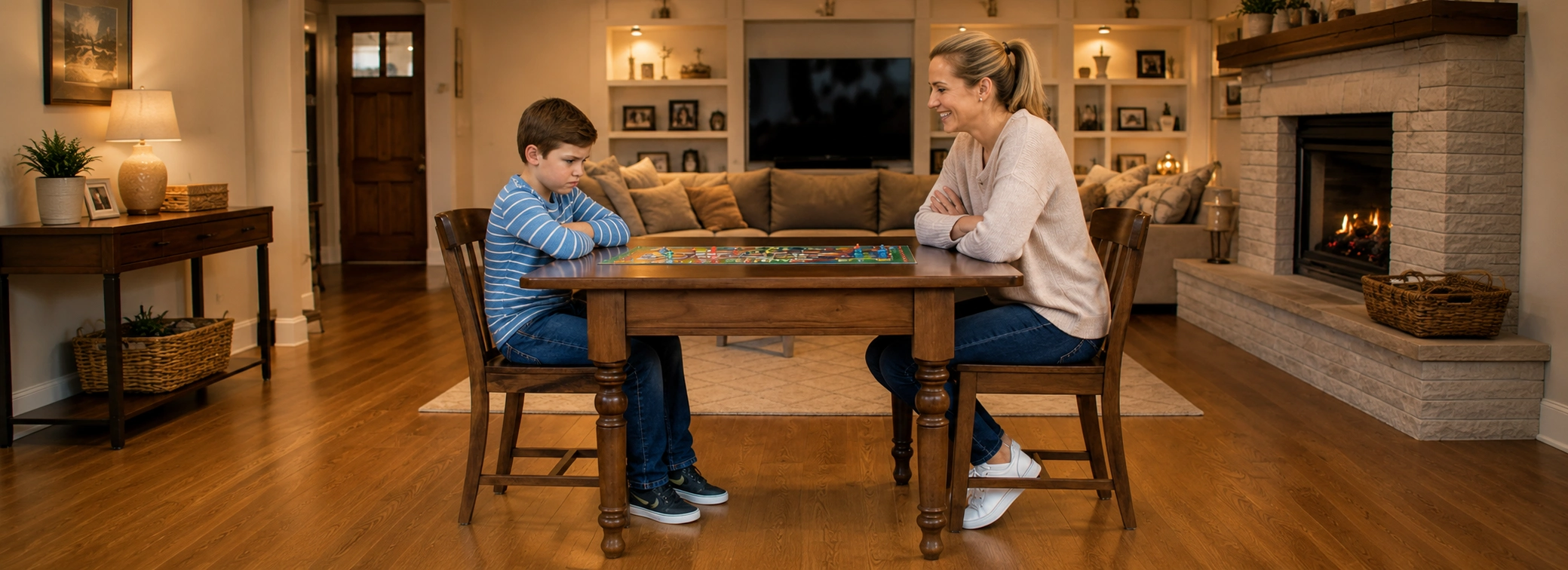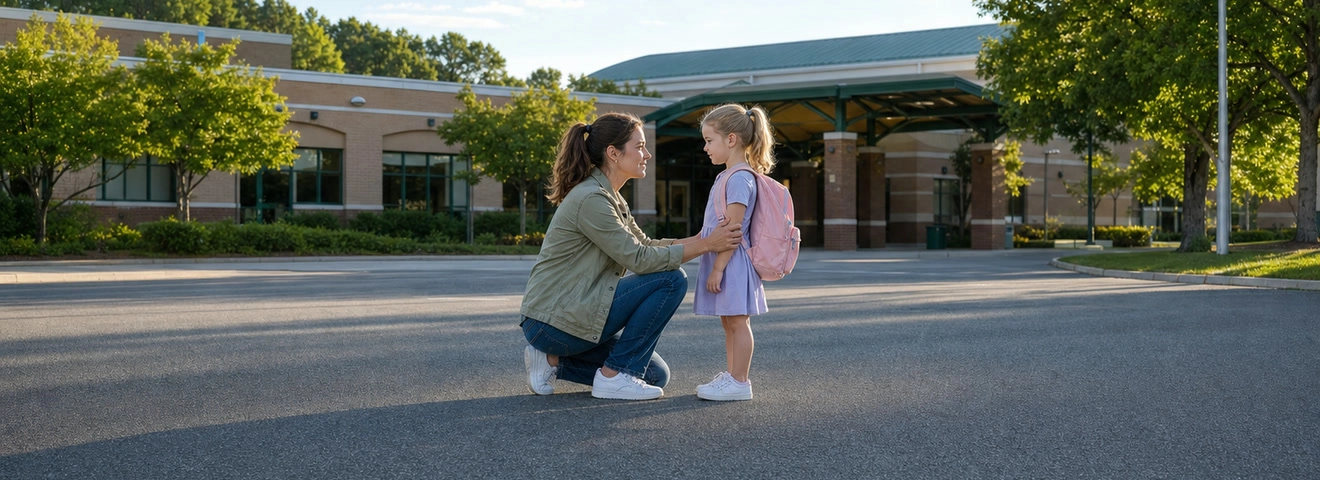
When a child suddenly refuses something they loved, swim class, a favorite food, the morning drop-off, it's one of the most disorienting things in parenting, because nothing obvious has changed. But children don't grow in a straight line. They grow in waves, with settled stretches followed by unsettled ones where old skills wobble while new ones are being built. A sudden refusal usually isn't your child being difficult. It's often growing self-awareness, noticing being watched, judged, or compared for the first time, or a new worry they can't yet put into words. Don't force it, and don't give up entirely. Find the middle: lower the pressure, stay curious, and give it time. Most of these refusals pass.
They loved swimming lessons for a year. Now they refuse to go. They were fine with school, now every morning is a battle. They happily ate that food for months, and suddenly it's disgusting. Something has changed, but you can't figure out what, because nothing obvious has changed at all. This is one of the most disorienting experiences in parenting, and one of the most common.
Why development isn't a straight line
Children don't grow in a smooth, steady climb. They grow in waves, settled stretches followed by unsettled ones, where they're reorganizing, stretching, and resetting. During those unsettled stretches, things that were previously fine can become shaky again. Skills and confidence that seemed locked in go temporarily offline while new ones are being built.
So a child who was fine with something is suddenly not fine with it, not because something bad happened, but because they've grown into a new stage that has them reassessing things they'd already settled. When a child suddenly refuses something they loved, they're usually not being difficult. They're moving through a change that looks like going backward from the outside but is actually growth in progress.
 A sudden refusal is usually not your child being difficult, it's often growing self-awareness they can't yet put into words.
What may have quietly shifted
**Growing self-awareness.** As children develop a stronger sense of themselves, they start to notice being watched, judged, and compared. A child who swam without a second thought at four might, at six, suddenly notice what they look like, how they stack up against other kids, or what it feels like to be corrected in front of people. **More complex friendships.** Friendships and social pecking orders become real and high-stakes somewhere around ages five to seven. An activity your child used to love might now carry a social dynamic that feels threatening. **A new fear or worry.** A child's imagination grows alongside everything else. Something that used to feel safe can suddenly feel scary, for reasons they may not be able to explain, or even fully understand themselves.
A MOMENT YOU MIGHT RECOGNIZE
Your six-year-old loved swimming, then watched an older child at the pool get splashed hard and struggle. She became quietly convinced the same thing would happen to her. She hasn't said any of this. She just doesn't want to go. And 'I don't want to' is the only explanation she has, because she doesn't have words for the rest.
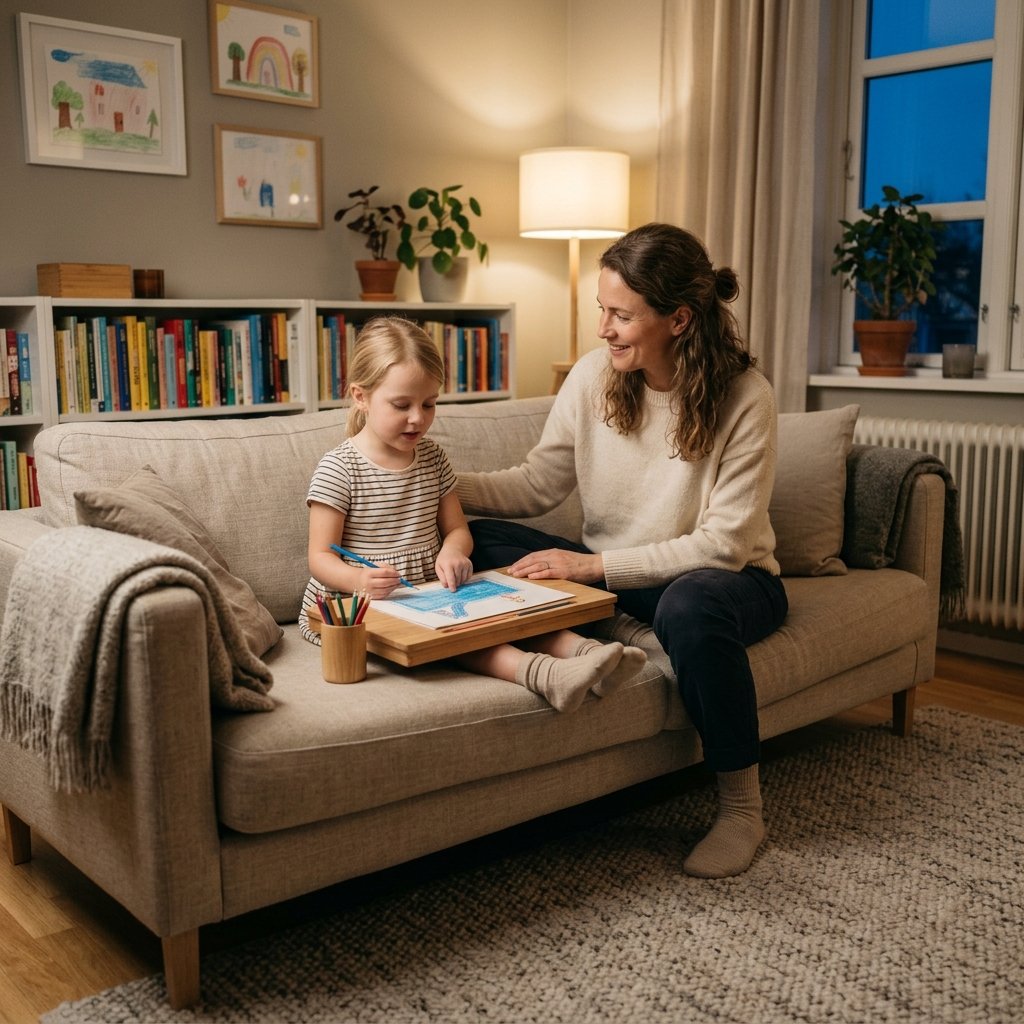 Growing self-awareness can turn a once-easy activity into an exposed one, noticing being watched or compared for the first time.
Why 'growing' can look like 'going backward'
Because skills don't develop in a straight, ever-upward line, a temporary wobble is a normal part of building the next level, not a sign something has broken. And more sensitive children often feel this shift most sharply: the same wiring that makes them notice everything means they notice being watched and compared sooner and more intensely.
What helps
Don't force it. Don't give up entirely, either. Find the middle ground, less exposure, more presence and support, and gentle curiosity about what changed. A question like 'What's different about it now?', asked on a calm, unrelated evening, can sometimes open a conversation that wouldn't happen any other way. And give it time. Most sudden refusals are temporary. They resolve on their own as the child moves through the developmental moment that set them off.
 Most sudden refusals are temporary, they resolve on their own as the child moves through the developmental moment that set them off.
When a sudden refusal is worth a closer look
Most flips pass on their own. It's worth checking in with your pediatrician, though, if the refusal spreads to many activities at once, if it comes with intense fear or distress, if you see changes in sleep, appetite, or a pulling-away from people, if it drags on for many weeks with no easing, or if your gut says something more is going on.
Is Your Kid's Screen Time Active or Passive?
Most screens capture a kid's attention without checking their understanding. Take our 2-minute diagnostic quiz to evaluate your kid's digital patterns, identify autoplay traps, and receive actionable insights to maximize active learning.
Start Screen Time & AI QuizFOR PARENTS
Play Buddy on Aiino gives kids a low-pressure place to explore at their own pace.
Curiosity thrives when children feel safe enough to explore. Aiino's Play Buddy creates a low-pressure space where kids can explore, ask questions, and try new things entirely at their own pace, no judgment, no comparison, no social stakes. For a child in a period of new self-consciousness, that kind of space can matter a lot. Built for ages 3 to 9. Zero ads. Zero tracking.
Research Citations
- [1]A stronger sense of self develops across childhood and gives rise to self-conscious feelings like embarrassment, so children start noticing being watched and judged in ways that can unsettle activities they once enjoyed (Lewis & Minar, European Journal of Developmental Psychology, 2022). View source →
- [2]More sensitive children perceive and process their surroundings more deeply, so a new wave of self-consciousness or social pressure tends to land harder for them (Lionetti et al., Frontiers in Psychology, 2024). View source →
- [3]Core skills like self-control develop gradually and unevenly rather than in a straight line, so a temporary wobble is a normal part of building the next stage (Geeraerts et al., Child Development, 2021). View source →