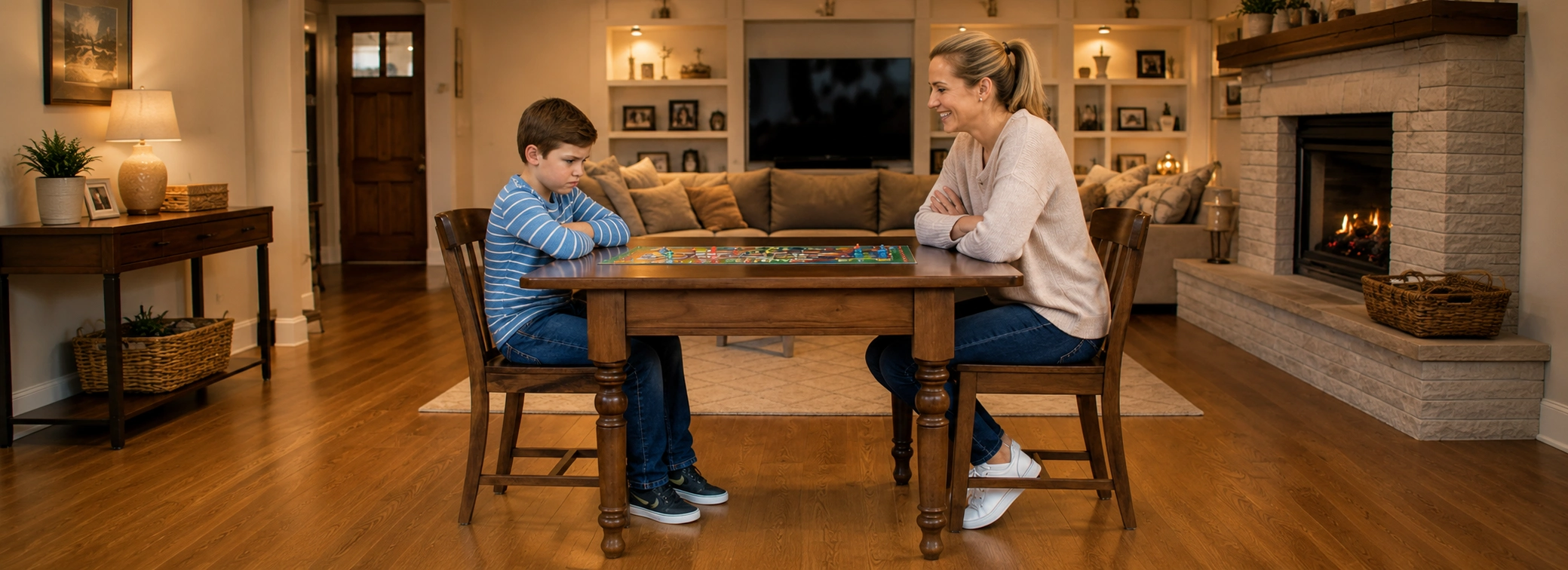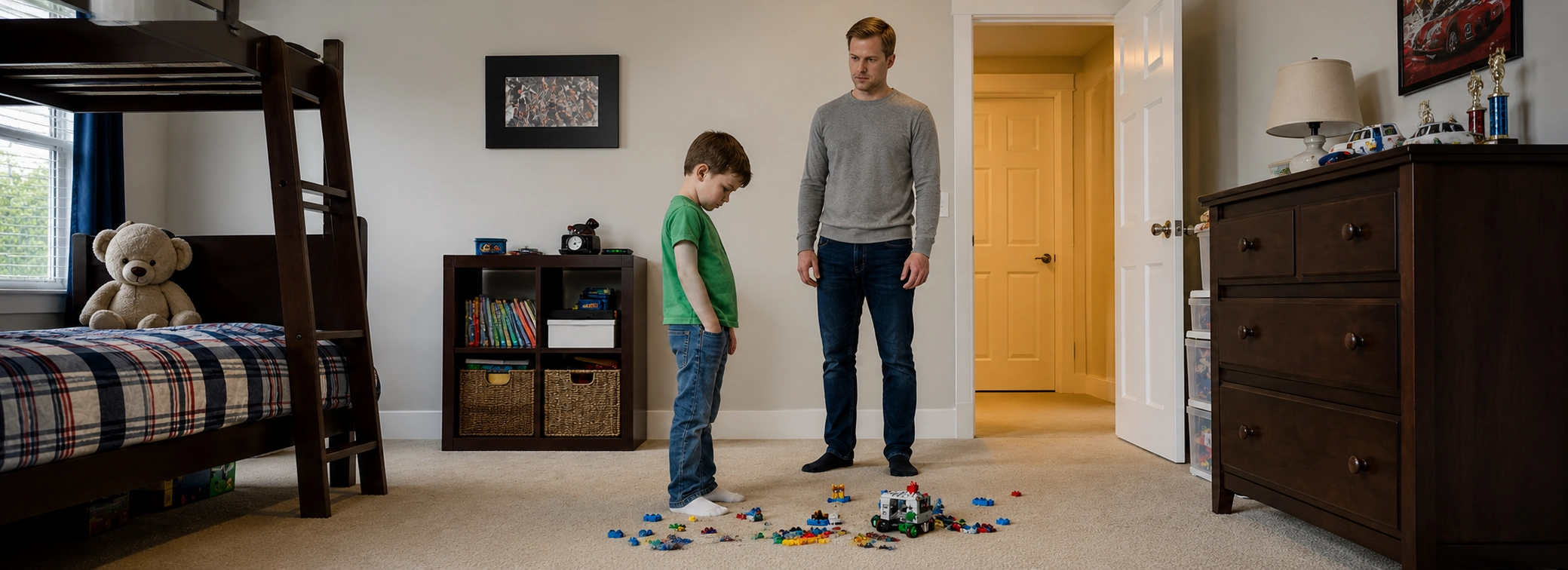
When a child destroys something in anger, a toy, a drawing, a slammed door, it's at heart the same impulse as hitting: a feeling too big for their body, with nowhere else to go. For young children, the jump from a huge internal feeling to a physical action is fast and direct. Throwing or ripping is physically satisfying to a flooded nervous system; it releases pressure and makes the outside match the chaos inside. That doesn't make it okay, but it does make it understandable, and most kids between three and seven do some version of it. The response that works: stay calm in the moment, repair together afterward, and build better outlets in advance, practiced when everyone's calm.
You hear a crash from upstairs. You go up to find something broken, a toy, a drawing, something that mattered to them minutes ago, now destroyed. They're furious. And you're standing there wondering how this happened and what it means.
Why feelings turn physical
Destroying things in anger is, at its core, the same impulse as hitting, the body discharging a feeling that has nowhere else to go. In young children especially, the link between an inside feeling and an outside action is direct and fast. The feeling is too big to hold. Something has to happen. And something does.
Throwing a toy, slamming a door, ripping a piece of paper, these are physically satisfying actions for a flooded nervous system. They release pressure. They make something on the outside match the chaos on the inside. This kind of physical venting is developmentally normal, and it fades for most children as the brakes of self-control and language grow in. That doesn't make it acceptable. But it does make it understandable.
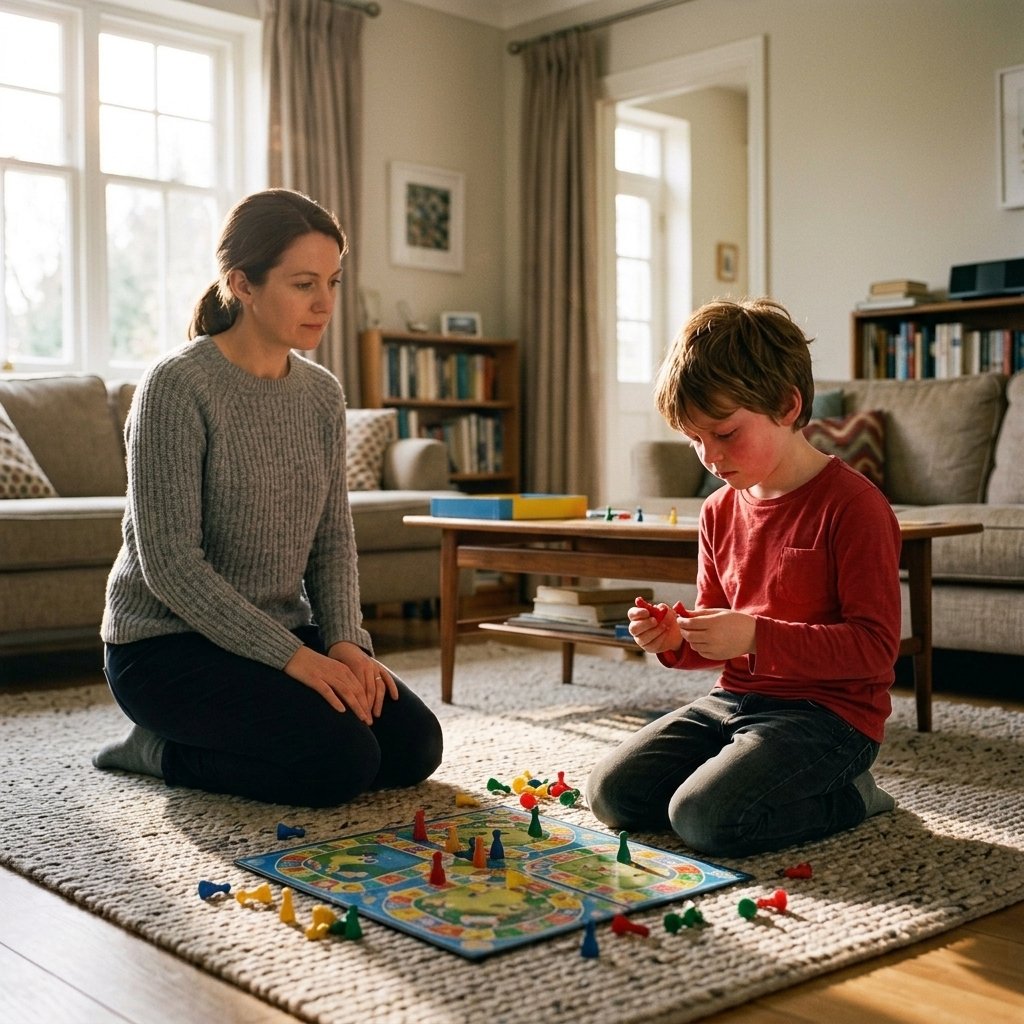 A child who destroys things when angry isn't a destructive child, they're a child with a feeling too large for their body and no better exit yet.
The difference between developmental and concerning
Most children between three and seven will, at some point, throw or break something in anger. This is developmental, frustrating to live with, but within the normal range, and it typically eases with age. It's more worth investigating when it happens very often and very intensely, when it involves deliberately destroying things that belong to other people rather than the child's own, when it includes aggression aimed at people, or when it keeps going and getting worse past age seven instead of settling.
A MOMENT YOU MIGHT RECOGNIZE
Your five-year-old, mid-frustration over a Lego build that won't work, throws the whole thing across the room. It's genuinely alarming. But you notice something: they immediately look horrified at what they've done. They feel regret. The action came before the thought. That gap, act, then regret, is exactly what emotional regulation is meant to close.
Help Shape the Future of Active Learning
Join our exclusive Founding Member program. Get early access to new interactive modules, direct input into our product roadmap, and lifetime pricing options.
What to do in the moment
Don't escalate. Match your energy to where you want your child to end up, not to where they are right now. Calm, low, and present. Adding your own heat to their fire only makes the flood bigger; your steadiness is what gives their nervous system something to settle toward.
What to do afterward
Once the storm has passed, repair together. 'Something got broken when you were angry. What should we do about that?' This isn't about punishment, it's about teaching consequence and repair, which is the actual lesson. Cleaning up together, or making a small plan to fix or replace what broke, does far more than a lecture in the heat of the moment.
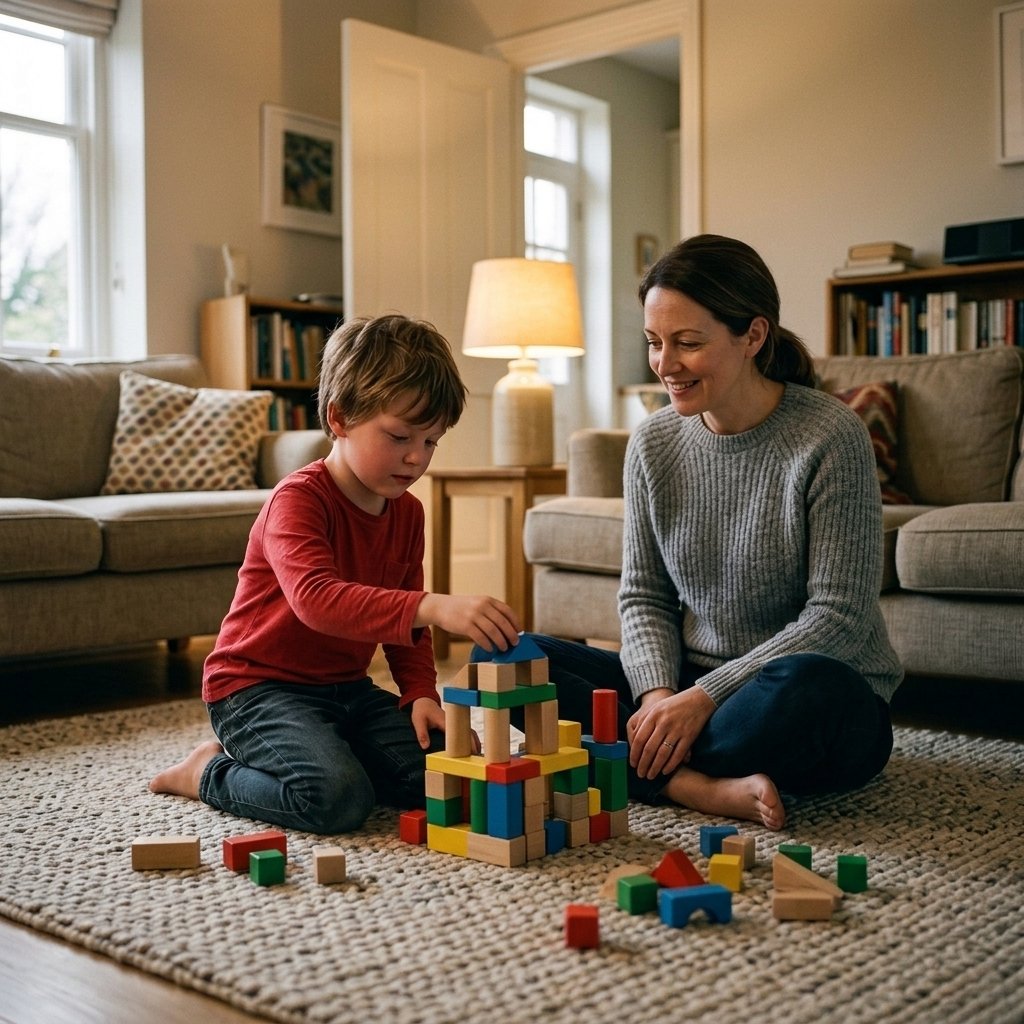 Repairing together teaches consequence and repair, which does far more than a lecture.
How to build better outlets in advance
Over time, give the feeling a different exit. 'When you feel like you want to throw something, you can squeeze this pillow as hard as you want, or we can go outside.' The alternative has to be physically satisfying to compete with the destruction, and it has to be practiced when your child is calm, because no one learns a new strategy mid-flood. Each calm practice slowly builds the pause between the feeling and the action.
 The alternative has to be physically satisfying to compete with the destruction, and it has to be practiced when your child is calm.
When destroying things is worth a closer look
Occasional throwing or breaking in anger is normal at this age. It's worth talking with your pediatrician or a child psychologist if the destruction is very frequent and intense, if it's aimed at people, if it involves deliberately wrecking others' belongings, if it's climbing rather than fading as your child moves past seven, or if your gut tells you something more is going on.
Is Your Kid's Screen Time Active or Passive?
Most screens capture a kid's attention without checking their understanding. Take our 2-minute diagnostic quiz to evaluate your kid's digital patterns, identify autoplay traps, and receive actionable insights to maximize active learning.
Start Screen Time & AI QuizFOR PARENTS
Interactive Stories on Aiino let kids practice what to do with explosive feelings.
Emotional skills are learned, not innate, and stories are one of the best classrooms. Aiino's Interactive Stories put children in situations where characters face explosive feelings and choose what to do next. Working through those choices in a story builds real pathways for handling them in life. Built for ages 3 to 9. Zero ads. Zero tracking.
Research Citations
- [1]Physically expressed anger like throwing and breaking sits alongside hitting as an early behavior that most children move away from as self-control, attention, and vocabulary develop (van Adrichem et al., Frontiers in Psychology, 2020). View source →
- [2]Physical expressions of anger appear early in life and fade for the great majority of children as they gain the skills to handle strong feelings differently (Hay et al., Monographs of the Society for Research in Child Development, 2021). View source →
- [3]A calm adult who helps a flooded child settle, and who teaches alternatives during calm moments, gradually builds the pause between a feeling and an action (Lobo & Lunkenheimer, Developmental Psychology, 2020). View source →