When your kid melts down over something tiny, a broken biscuit, the wrong cup, the wrong tone of voice, the small thing is almost never the real cause. Picture your kid carrying an invisible cup through the day, with every demand, tiredness, noise, school, a tricky moment with a friend, adding a little water. By late afternoon the cup is nearly full, and the broken biscuit is just the drop that makes it overflow. The reaction is not about the biscuit; it is about everything that filled the cup first. Once you see it this way, the most helpful response in the moment is calm, steady presence, and the most helpful thing between meltdowns is lightening the load earlier in the day.
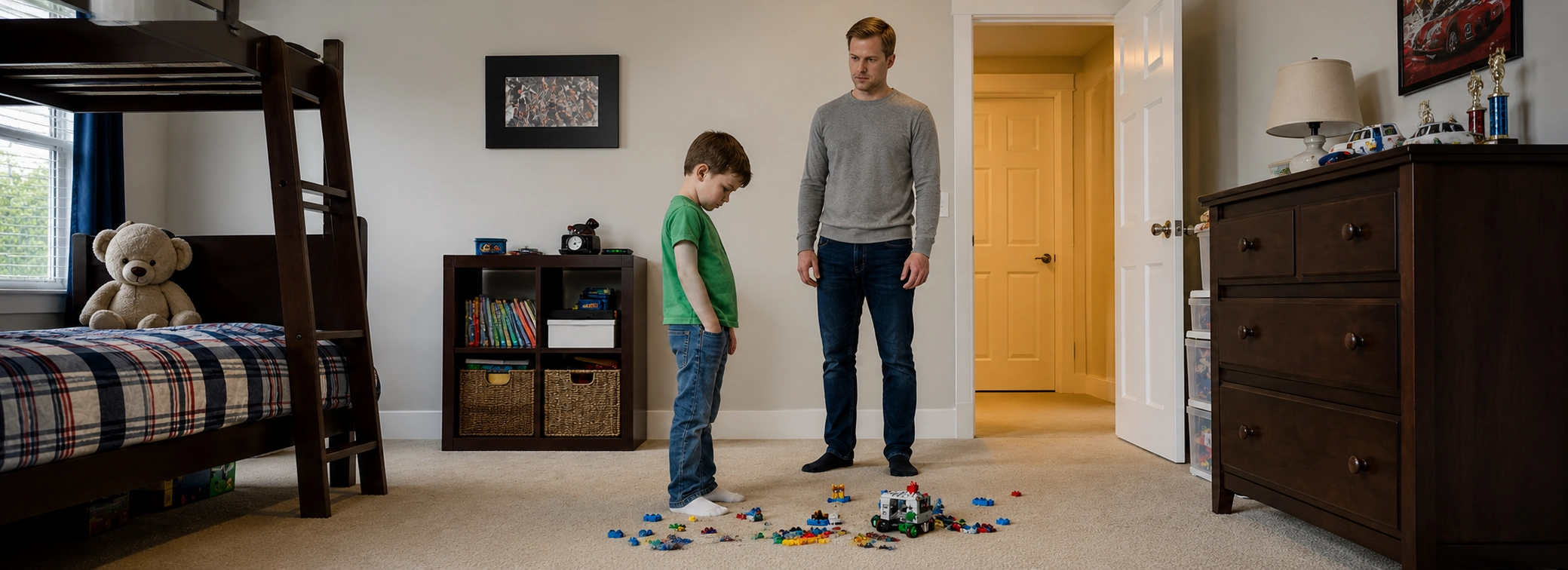
The biscuit broke in half when it was not supposed to. Or the sandwich was cut in triangles instead of squares. Or someone sat in their chair at the table. And now your kid is on the floor.
From the outside this looks like an overreaction. From inside your kid's nervous system, something very different is going on, and understanding what it is changes everything about how you respond.
The cup that was already full before the biscuit broke
Every kid carries an invisible cup through their day. Every demand on their system, physical, emotional, mental, sensory, social, adds a little water to that cup. When the cup reaches the top, the next thing that arrives, however small, makes it overflow.
The biscuit is not the problem. The biscuit is the moment the cup ran over. The real cause of the reaction is everything that filled the cup before the biscuit ever arrived.
This is why the same kid can eat a broken biscuit happily on a Saturday morning and fall completely apart over the same thing on a Wednesday afternoon after school. The biscuit has not changed. The cup has. On Saturday morning it was nearly empty. On Wednesday afternoon it was already almost full, from a hard day at school, from being tired, from an argument with a sibling on the way home, from a dozen tiny demands that each took a little of what was there.
THE WEDNESDAY AFTERNOON PATTERN
One parent put it this way: “He is always fine in the morning. Then he gets home from school and within twenty minutes he is in pieces over something I cannot even identify. Last week it was because the juice was in the wrong glass. The week before it was because I said his name with the wrong tone. I cannot work out what I am doing differently in the afternoons.” She was not doing anything differently. The cup was different.
Help Shape the Future of Active Learning
Join our exclusive Founding Member program. Get early access to new interactive modules, direct input into our product roadmap, and lifetime pricing options.
How the stress load builds up across the day
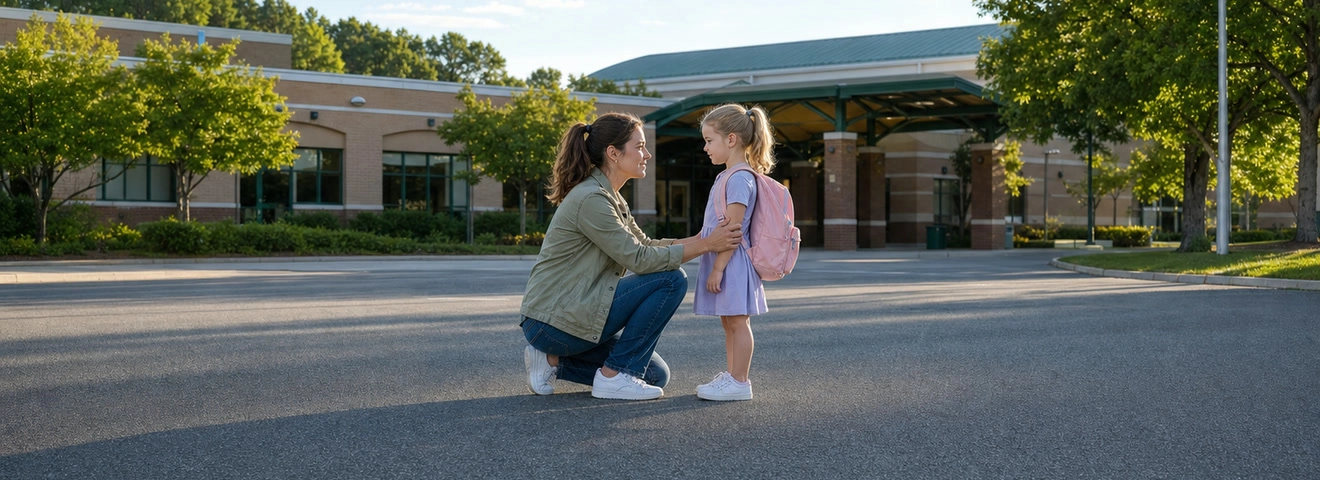
A school day asks a great deal of a young kid, far more than most adults realise, because we have forgotten what it takes.
Sitting still when their body wants to move. Waiting their turn when they have something urgent to say. Handling disappointment when things do not go their way on the playground. Following a teacher's instructions even when those instructions clash with what they want. Reading the shifting social map of a classroom, who is friends with whom today, whether the person they want to sit beside will let them, whether the group will include them at lunch.
Each of these draws on the same limited supply of self-control and mental energy. A kid who has spent six or seven hours making these small withdrawals arrives home with very little left. The system that would normally handle a broken biscuit without drama is running on empty, so small things land large, because there is nothing left to absorb them.
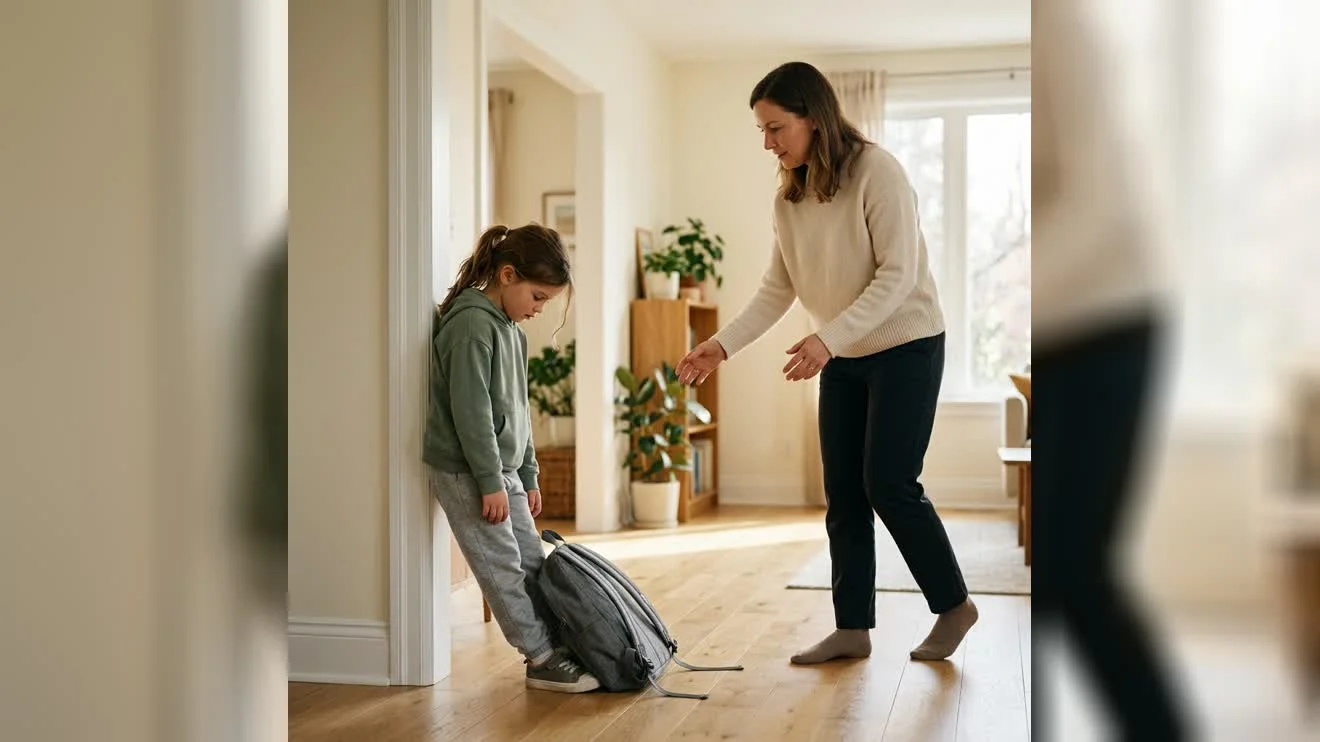 A school day asks a great deal of a young kid, and they arrive home with very little left in reserve.
Why kids cannot tell you what is actually wrong
One of the most frustrating parts of these reactions is that your kid genuinely cannot explain what is wrong. Ask them, and they will say it is the biscuit, because from where they stand. It is the biscuit.
Being able to step back from a strong feeling, work out where it actually came from, and put that into words takes a level of self-awareness that builds up slowly across childhood and into the teenage years. A kid aged 3 to 9 cannot reliably do this, especially in the heat of distress, when the thinking part of the brain that would handle that kind of reflection is least available. So when you ask “what's wrong” and your kid says “the biscuit,” they are not being difficult. They truly experience the biscuit as the problem. They cannot feel the load that built up. They can only feel the overflow.
A kid who says “it's the biscuit” is not wrong. The biscuit was the last thing. They just cannot see everything that came before it.
The things that fill the cup fastest
Switching from one thing to the next
Every change, from one activity to another, one place to another, one group of people to another, asks the brain to shift gears, and shifting gears takes effort. A school day is full of these shifts, the journey home is one, and moving from school back to home is a big one. By the time a kid reaches the front door they have already made many of them, so the demand to make one more, to stop doing one thing and start another, can be what tips the balance.
Sights, sounds, and textures
Classrooms are full of sensory input, noise, movement, bright displays, other kids close by. For kids who are more sensitive to all this (a normal difference in how nervous systems are wired, not a disorder), a school day takes a real toll. A kid who held it together through a full day of noise and bustle may be genuinely worn out by home time, and one small extra irritation, a sock that feels wrong, foods touching on the plate, a sound they would usually ignore, can become unbearable in that worn-out state.
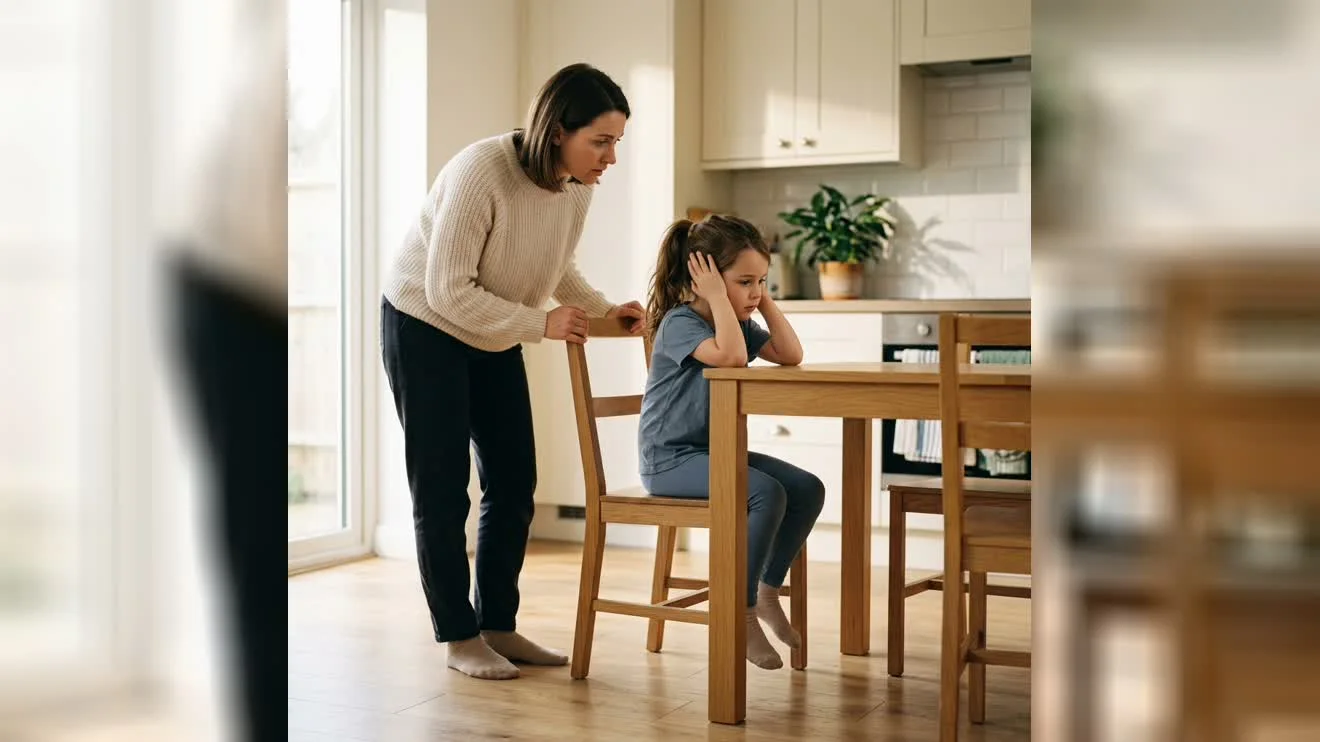 For kids who are more sensitive, a full day of noise and bustle takes a real toll.
Reading other people
Working out what other people mean, managing their own reactions to what others do, and following the unwritten rules of a group are mentally expensive at any age. For kids, whose social understanding is still developing. They are extremely expensive. A kid who has been working hard at fitting in all day has already spent a great deal from their account on that alone.
What “out of proportion” really means in a developing brain
Adults look at a kid's reaction to a broken biscuit and think: that reaction is far too big for that trigger. But that assumes the trigger is the biscuit. It is not. The trigger is everything that came before the biscuit, plus the biscuit.
If a kid arrives at the biscuit with a cup that is already ninety per cent full, then the biscuit is at most ten per cent of the reaction. The reaction is actually in proportion, to everything that filled the cup, not just to the drop that made it spill. You only see the biscuit because that is the only part that happened in front of you. This is not a defence of the reaction; it is an explanation of it. Your kid is not choosing to react this way. Their nervous system is doing what nervous systems do when the load is bigger than the capacity. Understanding this does not mean the behaviour needs no guidance. It means the guidance can be accurate instead of confused.
How to spot the early warning signs
The cup does not fill to overflowing without warning. Kids give signals before they hit the top, but the signals are easy to miss. They are subtle, and parents are usually busy with their own demands at the same time.
The voice changes: a little higher, a little faster, a little more insistent. Patience drops, and things that would normally pass become irritating. The body changes: more fidgeting, more clumsiness, more sensitivity to touch than usual. Questions get harder to answer calmly, requests take longer to land, and the kid just seems slightly off, not dramatically, just slightly. A parent who learns to read these signs in their own kid gets a window before the overflow: not to head it off with a big intervention, but to ease off the demands landing on an already-full cup. Fewer requests, lower noise and stimulation, a quiet moment alongside them rather than a busy one. Sometimes this widens the window enough that the cup does not overflow at all. Sometimes it just makes the overflow smaller and shorter.
 The cup does not fill to overflowing without warning. Easing the demands when you spot the signs can widen the window.
What helps, and what makes the next one more likely
What helps in the moment is the same as in any meltdown: calm presence, few words, warm closeness. The cup has overflowed, and your job is to let it drain and be the steady container it drains into, not to explain the cup to your kid, not to argue about the biscuit, just to stay and be the calm presence their nervous system needs to find its way back.
 A steady adult acts as a calm container for the overflow.
What helps between reactions is easing the load earlier. Look at the day and ask: where are the biggest demands, and can any of them be reduced? Can the journey home be made gentler, a quiet car ride rather than a busy one, a snack ready straight away, twenty minutes of low-demand time before any requests are made?
What makes the next reaction more likely is meeting the overflow with escalation. A parent who responds to the biscuit meltdown with frustration, argument, or raised voices adds a big new demand to a system already at the top, so the cup fills faster and the next overflow comes sooner. This is not a criticism, frustration in that moment is completely understandable, but understanding the mechanism makes it possible to choose differently, even when the choice is hard.
Is Your Kid's Screen Time Active or Passive?
Most screens capture a kid's attention without checking their understanding. Take our 2-minute diagnostic quiz to evaluate your kid's digital patterns, identify autoplay traps, and receive actionable insights to maximize active learning.
Start Screen Time & AI QuizMost of this is simply the developing brain doing its normal thing, and it genuinely gets easier as your kid grows. If the reactions are extreme for their age, are not easing over time, or come with aggression or distress that worries you. It is always reasonable to check in with your GP, paediatrician, or a child psychologist for reassurance and support.
FOR PARENTS
Interactive Stories on Aiino build emotional vocabulary.
A kid who can name their feelings manages them more easily. Interactive Stories give kids space to work through emotional experiences inside a story, building the words for feelings that small-trigger reactions so often signal are still developing. Built for kids aged 3 to 9. Zero ads. Zero tracking.
Research Citations
- [1]Around 30% of kids are highly sensitive, taking in more from their surroundings and becoming overwhelmed more easily (Pluess et al., Developmental Psychology, 2018). Developmental Psychology. View source →
- [2]The wear of ongoing stress builds up in kids's bodies over time, a cost researchers call allostatic load (Phua et al., Proceedings of the National Academy of Sciences, 2023). Proceedings of the National Academy of Sciences. View source →
- [3]The link between the brain's alarm and its braking system is still maturing through early childhood, which limits how well young kids manage stress (Park et al., Social Cognitive and Affective Neuroscience, 2018). Social Cognitive and Affective Neuroscience. View source →