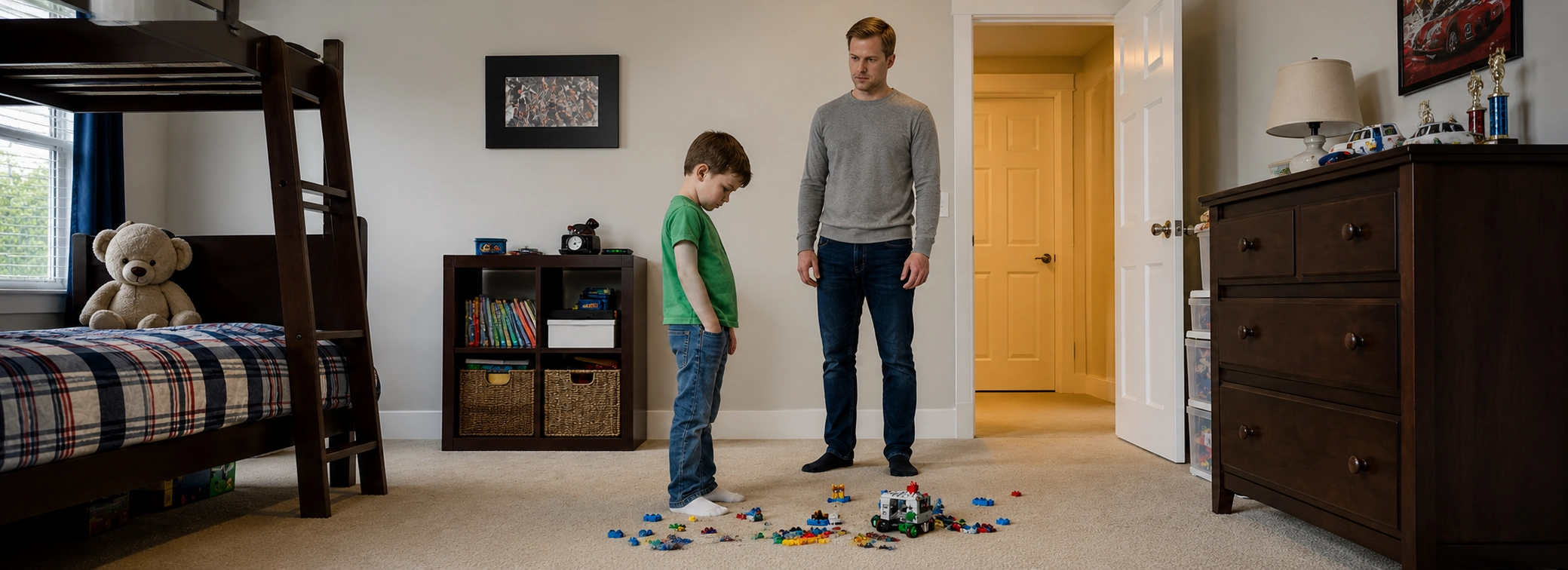
What kids aged three to nine need most is not enrichment. It is not more activities, more educational content, or more organized experiences. It is a secure attachment relationship, a deep, reliable bond with at least one adult who knows them specifically, responds to them consistently, and stays present through their hard moments as well as their easy ones. Research consistently shows that this one relationship, when it is secure, is the single most powerful predictor of a kid's resilience, emotional regulation, academic performance, and ability to form healthy relationships later in life. No amount of enrichment substitutes for it. No amount of screen time replaces it. And it is built not in grand gestures but in accumulated ordinary moments.
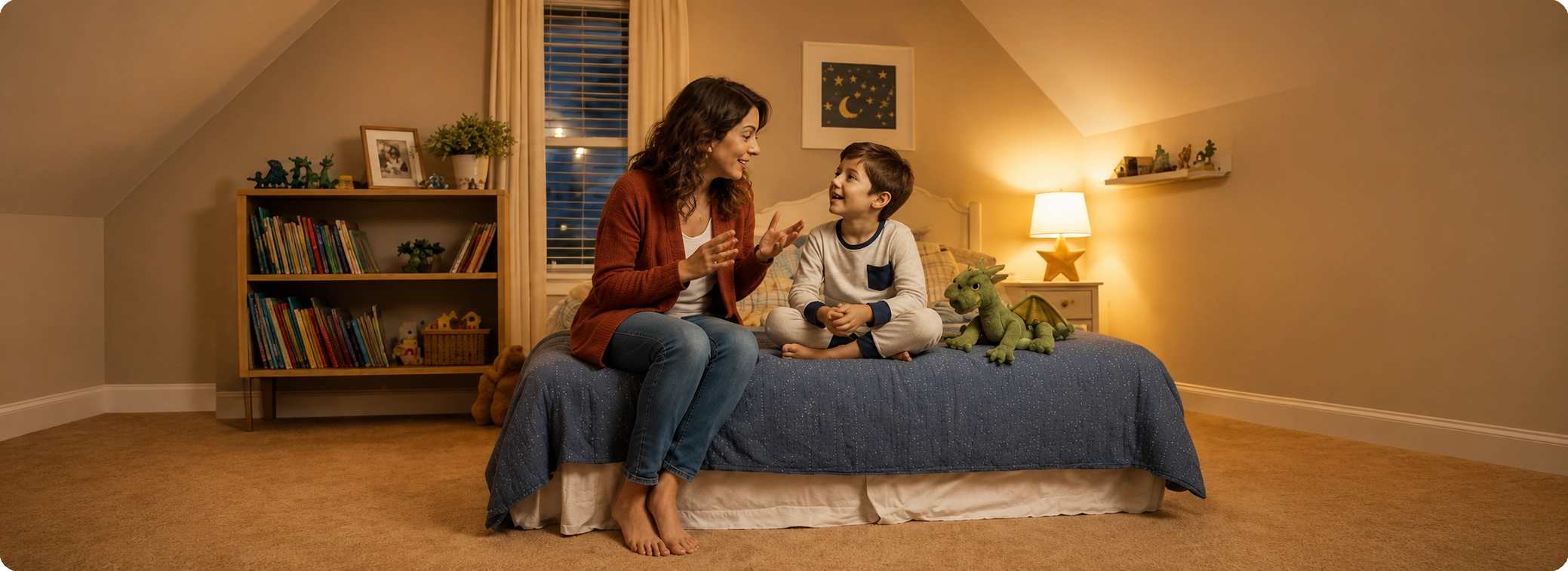
It is bedtime. You have had a long day. Your six-year-old asks you to tell them a story. Not read one, tell one. About them. They want to be the hero. They want dragons. They want it to end with them winning.
You are exhausted. And yet something in you knows that this matters.
It does. More than you probably realize. Because what your kid is asking for in that moment is not entertainment. They are asking you to see them, to imagine them as powerful and capable, to spend your limited energy building a world in which they are at the center. That is one of the most fundamental things a kid between three and nine actually needs. Not more toys. Not another class. You, specifically, paying attention, specifically to them.
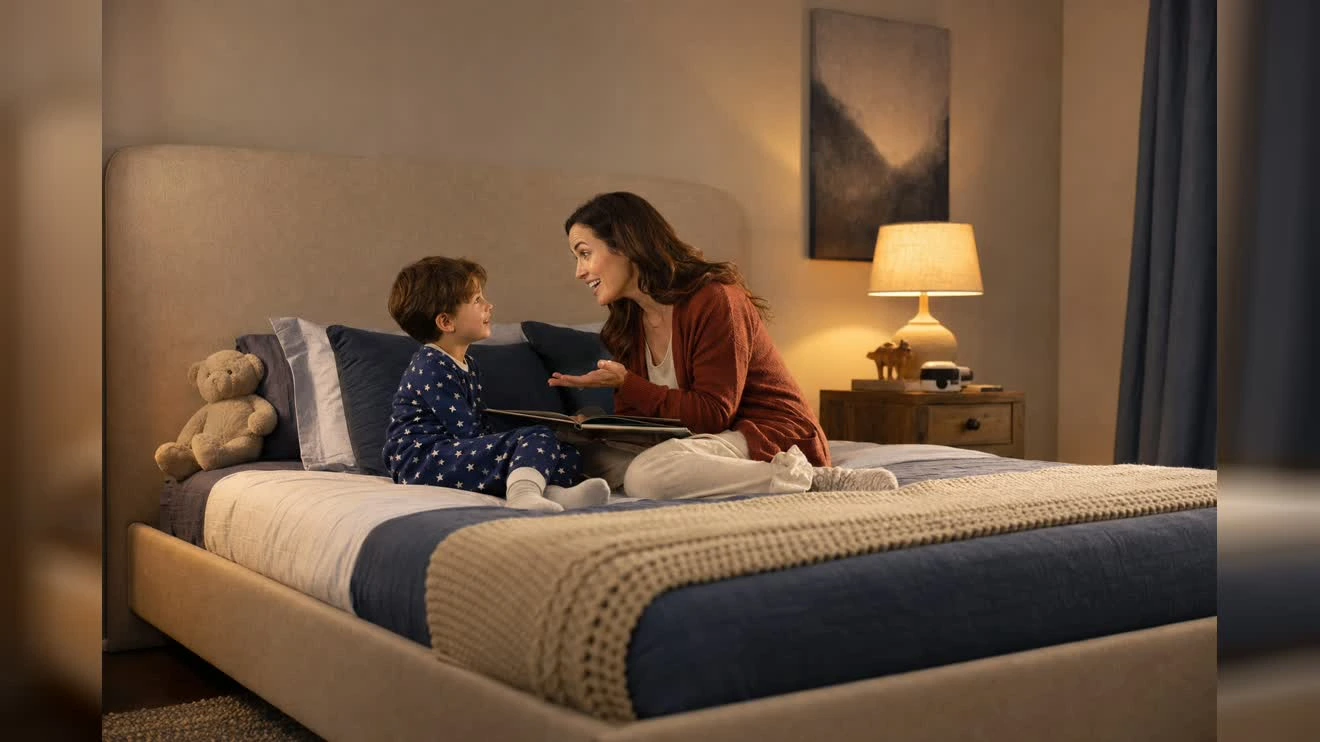 Not more toys. Not another class. You, specifically, paying attention specifically to them.
What Secure Attachment Actually Is, and What It Produces
Attachment theory was developed by the British psychiatrist John Bowlby in the 1950s and 1960s, and has been built on and confirmed by decades of research since. The core idea is straightforward: kids are biologically wired to form a deep bond with at least one primary caregiver. This bond, when it is secure, becomes the foundation from which everything else develops [1].
A secure attachment relationship has three main features. The caregiver is consistently available, not physically present every moment, but reliably accessible when the kid needs them. The caregiver is consistently responsive, they notice the kid's signals and respond in ways that make the kid feel understood. And the relationship is warm, the kid feels genuinely valued, not just managed.
What this produces in a kid is remarkable in its scope. Research shows that kids with secure attachment relationships demonstrate better emotion regulation, stronger social skills, higher academic performance, and significantly greater resilience when facing stress or setbacks [2]. Approximately 70 percent of securely attached infants maintain secure attachment patterns into adulthood, suggesting that what is built in these early years genuinely lasts [3].
“Secure attachment has broad and long-lasting benefits for the development and wellbeing of a kid. Kids learn to regulate their behavior and emotions and develop their sense of self-worth through their attachment relationships, using their attachment figure as a secure base from which to explore.”
— Taylor & Francis
The "secure base" concept is one of the most important ideas in all of developmental psychology. It means that a kid who feels genuinely secure in their attachment relationship is free to explore the world with confidence, because they know there is a safe place to return to. The security of the home base is what makes exploration possible. This is why securely attached kids tend to be more curious, more willing to try new things, and more able to handle setbacks, not because they are more naturally brave, but because they feel genuinely backed up.
What Insecure Attachment Looks Like in Everyday Life
Attachment insecurity does not usually look dramatic. It shows up in patterns of everyday behavior that are easy to interpret as character traits rather than as attachment signals. Understanding the difference changes how parents respond.
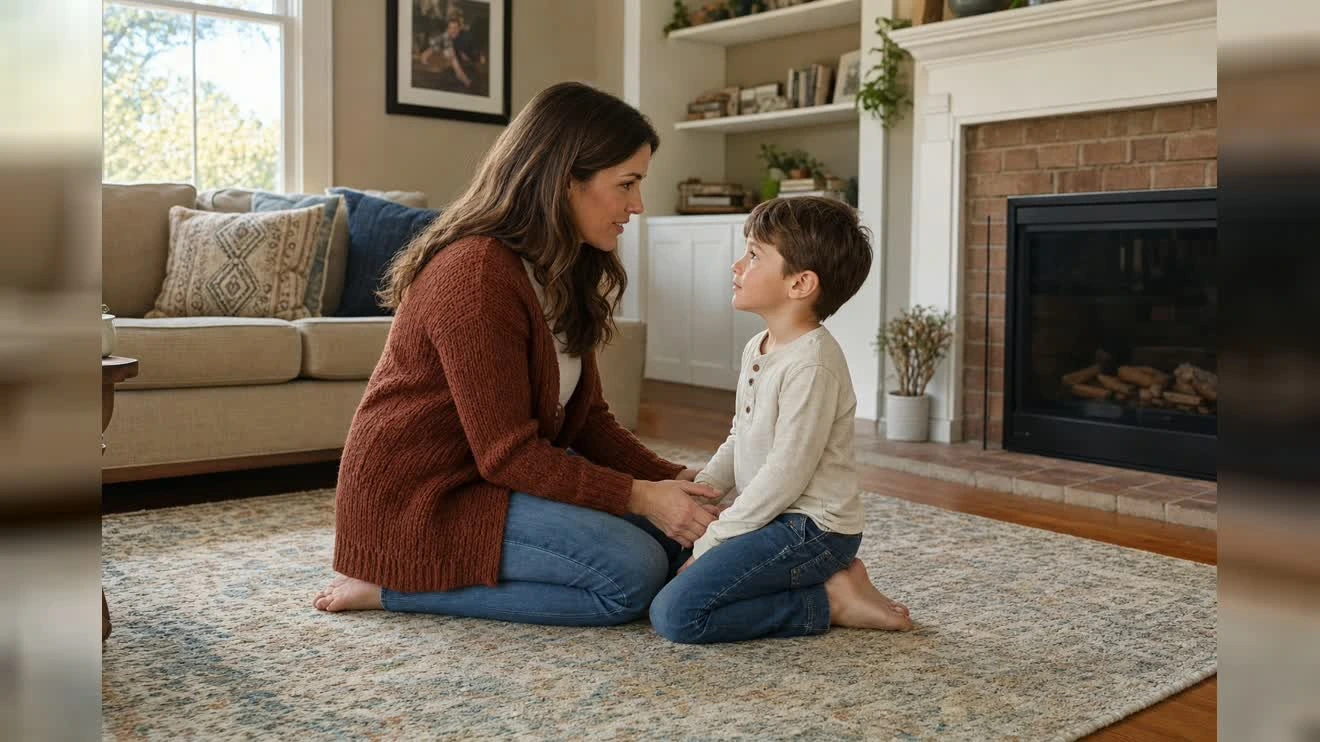 Attachment is built in accumulated ordinary moments, eye contact, presence, getting down to their level.
The kid who is clingy and anxious
Kids who have not had consistent responsiveness from their primary caregiver often develop anxious attachment. They become highly vigilant about the caregiver's availability, shadowing them, becoming distressed at separations, struggling to settle when the caregiver is out of sight. This looks like anxiety. It is anxiety, specifically about whether the attachment figure will be reliably there. The behavior is a strategy, not a personality trait: the kid has learned to amplify their signals because amplification is what has worked to get a response.
The kid who seems unusually independent
Other kids develop what researchers call avoidant attachment. They appear remarkably self-sufficient, rarely asking for help, keeping emotional distance, not showing much distress at separations or reunions. This can look like mature independence. It is often the opposite: a kid who has learned that expressing need does not reliably produce responsiveness, and has adapted by suppressing need entirely. The kid who appears not to need you may be the one who has most concluded that needing you does not work.
Both patterns, the clingy kid and the unusually independent one, are adaptations to what the kid has experienced, not fixed character traits. And both respond to change, particularly when that change involves a caregiver becoming more consistently present and more reliably attuned to the kid's actual signals.
Why Small Moments Are the Actual Big Moments
Parents often picture attachment-building as something that happens in special moments, vacations, milestone conversations, significant gestures. Those matter. But the research is consistent and specific: attachment is built primarily in the accumulated weight of ordinary small moments, repeated across thousands of daily interactions [1].
Eye contact during dinner. Getting down to their level when they are upset rather than managing them from a standing position. Following through on something you promised, however small. Remembering the specific thing they mentioned last week and asking about it. Being the person who notices when something is off before the kid can name it.
None of these require time, money, or any particular parenting expertise. They require attention. They require treating the kid as a specific person whose inner life is interesting and worth knowing. Kids do not need perfect parents. They need predictable ones, parents whose responses to distress they can anticipate, whose warmth does not feel conditional on their behavior, and whose presence their nervous system has learned it can rely on.
That reliability, experienced across thousands of small, ordinary moments, is what becomes security. Not the grand gestures. The accumulated ordinary ones.
Serve and Return, The Back-and-Forth That Builds Brains
The Harvard Center on the Developing Kid uses the term "serve and return" to describe one of the most important interaction patterns in early child development. It refers to the back-and-forth exchange that happens when a kid initiates, reaches for something, makes a sound, points at something, asks a question, and the adult responds in a way that acknowledges and builds on what the kid did [4].
This exchange, simple as it sounds, is extraordinarily powerful. Research published in 2023 tracking mother-kid and father-kid serve and return interactions found that the quality of these exchanges at nine months was significantly associated with kids's language skills at eighteen and twenty-four months. Parents who consistently noticed what their kid was attending to and responded with relevant, warm engagement produced kids with measurably stronger language development [5].
The Harvard Center describes these interactions as literally shaping brain architecture. Each real serve and return exchange, each moment of a kid initiating and a parent responding meaningfully, builds and strengthens the neural connections that underlie language, emotional regulation, and the capacity for learning. "The most important thing any parent can do to support their kid's brain development," says Dr. Jack Shonkoff, Director of the Harvard Center: "is to engage in serve and return interaction." [4]
WHAT SERVE AND RETURN LOOKS LIKE IN PRACTICE
Your four-year-old points at a dog across the street. You could ignore it. You are in the middle of something. Or you could look where they are pointing, name it: "Yeah, a big dog! What kind do you think it is?" They say they do not know. "Fluffy coat, maybe a poodle? What do you think?" They consider. You wait. They decide: "A sheep dog!" You laugh: "Maybe! Do you think it chases sheep?" Twenty seconds. A genuine exchange about nothing in particular. And in those twenty seconds, something real was built.
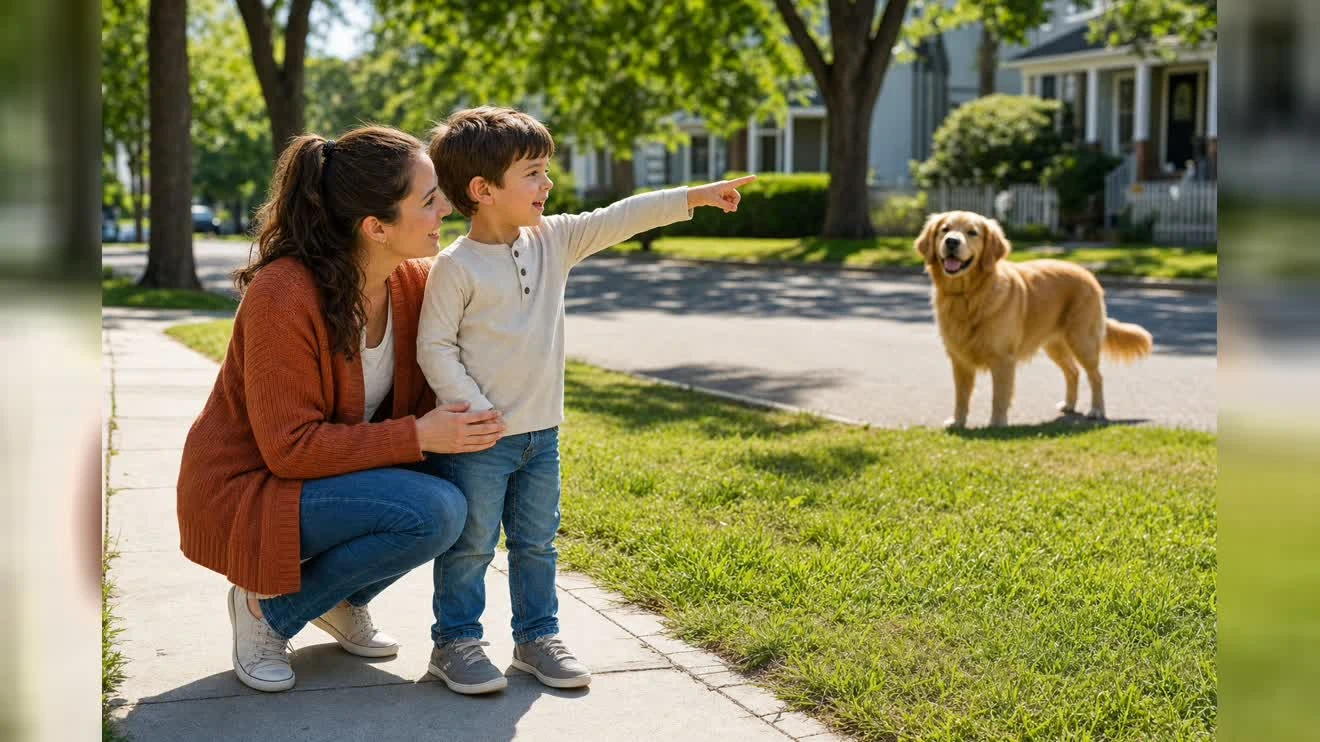 Each real serve and return exchange builds the neural connections that underlie language, regulation, and learning.
Help Shape the Future of Active Learning
Join our exclusive Founding Member program. Get early access to new interactive modules, direct input into our product roadmap, and lifetime pricing options.
The School Drop-Off Battle, What It Is Really About
Drop-off at school has always been a battle. Your kid clings, cries, bargains for five more minutes. You have been told they settle immediately once you are gone. You feel guilty. You wonder if something is wrong.
Most likely, nothing is wrong, with school, with you, or with your kid. The clinging and the distress are an attachment signal, not a behavior problem. They mean that your kid has a secure enough attachment to feel the separation acutely. Kids with insecure attachment often separate more easily at drop-off, not because they are fine, but because they have learned not to expect that showing distress will bring the response they need.
The kid who cries at drop-off and settles immediately once you are gone is almost always doing exactly what a securely attached kid does. They protest the separation from their secure base. They accept the new environment because they trust that the base will be there when they return. The distress at the door is not evidence of a problem. It is evidence of the security of the bond.
What helps at drop-off is not rushing through the goodbye. It is making it brief but warm and consistent. The same ritual every day: a specific hug, a specific phrase, a reliable signal that you are going and you will be back. Predictability reduces anxiety far more effectively than either prolonged comfort or abrupt departure.
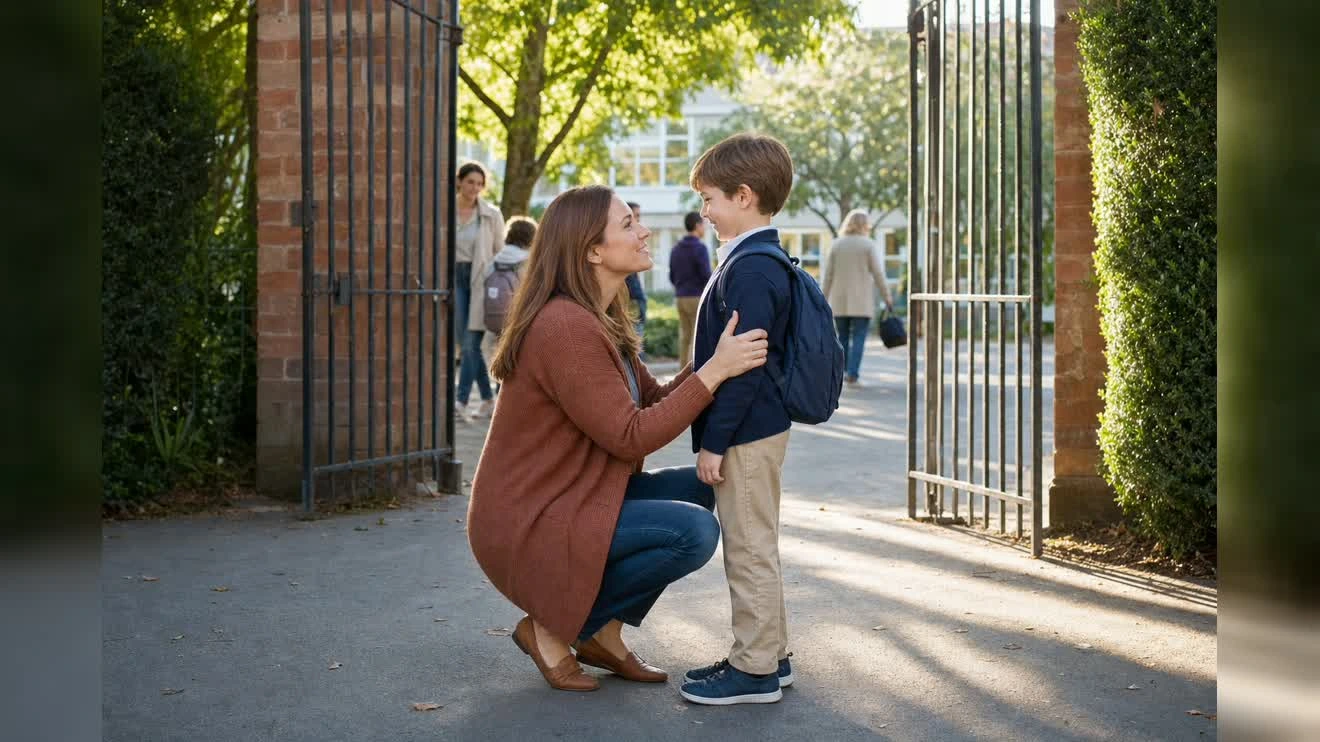 Brief, warm, and consistent, the same ritual every day signals you are going and you will be back.
Stories as One of the Most Powerful Attachment Tools Available
One of the oldest and most powerful tools of human bonding is storytelling. Not reading stories from a page, but constructing them together, in real time, with the kid at the center. This kind of storytelling communicates something that is surprisingly hard to say in direct language: "I see you. I have thought about what you love and what you fear and what you want to be. I made this specifically for you."
That message: "I made this for you", is one of the most attachment-rich communications a parent can offer. It requires the parent to know the kid specifically: their current obsessions, their fears, their sense of humor, the things they are working through right now. Constructing a story that weaves those elements together is, at its core, an act of attunement, the parent demonstrating that they have been paying the kind of attention that individualized knowledge requires.
Research on narrative and attachment consistently finds that kids who are told stories about themselves, particularly stories in which they are capable, valued, and loved, develop stronger positive self-concepts and greater emotional security. The story is not just entertainment. It is a mirror that shows the kid who the parent sees when they look at them.
Is Your Kid's Screen Time Active or Passive?
Most screens capture a kid's attention without checking their understanding. Take our 2-minute diagnostic quiz to evaluate your kid's digital patterns, identify autoplay traps, and receive actionable insights to maximize active learning.
Start Screen Time & AI Quiz"The most powerful stories are not the ones in books. They are the ones a parent creates, with this specific kid in mind, on this specific evening, knowing exactly what that kid needs to hear."
What Parents Can Actually Do, Without Buying Anything
Be reliably there for the hard moments
Security is built most powerfully not in easy moments but in hard ones. The parent who stays calm and present when a kid is at their worst, who does not withdraw warmth, who does not become frightening, who holds the relationship steady through the meltdown, is building something in that moment that no amount of enrichment can replicate. Consistent warmth through hard moments is the single most attachment-building thing a parent can do.
Make the ordinary moments count
You do not need to create special time. You need to be genuinely present in the ordinary time you already have. Dinner without screens. The walk to school where you actually talk. The five minutes before bed when you are not simultaneously on your phone. Presence, real, undivided, unhurried, is what kids are reading. And they read it accurately.
Notice and respond to small things
Attachment is built in the micro-moments of attunement, the parent who notices the slight change in their kid's face before the kid can name what is wrong, who remembers the small worry they mentioned three days ago and asks how it went, who catches the eye across the room and communicates recognition. These moments are brief. They are not expensive. And they accumulate into the kid's felt sense that they are genuinely known.
Repair after rupture
No parent is consistently attuned. Every relationship has ruptures, moments of misattunement, short tempers, distracted responses. What research consistently shows is that security is not built by the absence of rupture but by the reliable presence of repair. The parent who loses their temper and then comes back, acknowledges it, and reconnects, who models repair, is building something as important as the warmth they show in the easy moments. Kids do not need perfection. They need a parent who comes back.
Research Citations
- [1]Bowlby, J. (1988). "A Secure Base: Parent-Kid Attachment and Healthy Human Development." Basic Books. Reviewed in Simply Psychology (2025). View source →
- [2]Kerr, S., et al. (2023). "Attachment security in kids: systematic review of outcomes and interventions." Early child development and Care, Taylor & Francis. View source →
- [3]Sroufe, L.A., & Waters, E. (2022). "Attachment Theory, longitudinal research on security from infancy to adulthood." Reviewed in iResearchNet Psychology. View source →
- [4]Harvard Center on the Developing Kid (2024). "Serve and Return, Five Steps for Brain-Building Interaction." Center on the Developing Kid, Harvard University. View source →
- [5]Chen, Y., & Cabrera, N.J. (2023). "Mother-kid and father-kid serve and return interactions at 9 months: Associations with kids's language skills at 18 and 24 months." Infant Behavior and Development, 73:101894. View source →
- [6]Tabachnick, A., et al. (2022). "Secure Attachment in Infancy Predicts Context-Dependent Emotion Expression in Middle childhood." Emotion Journal, PMC, National Library of Medicine. View source →