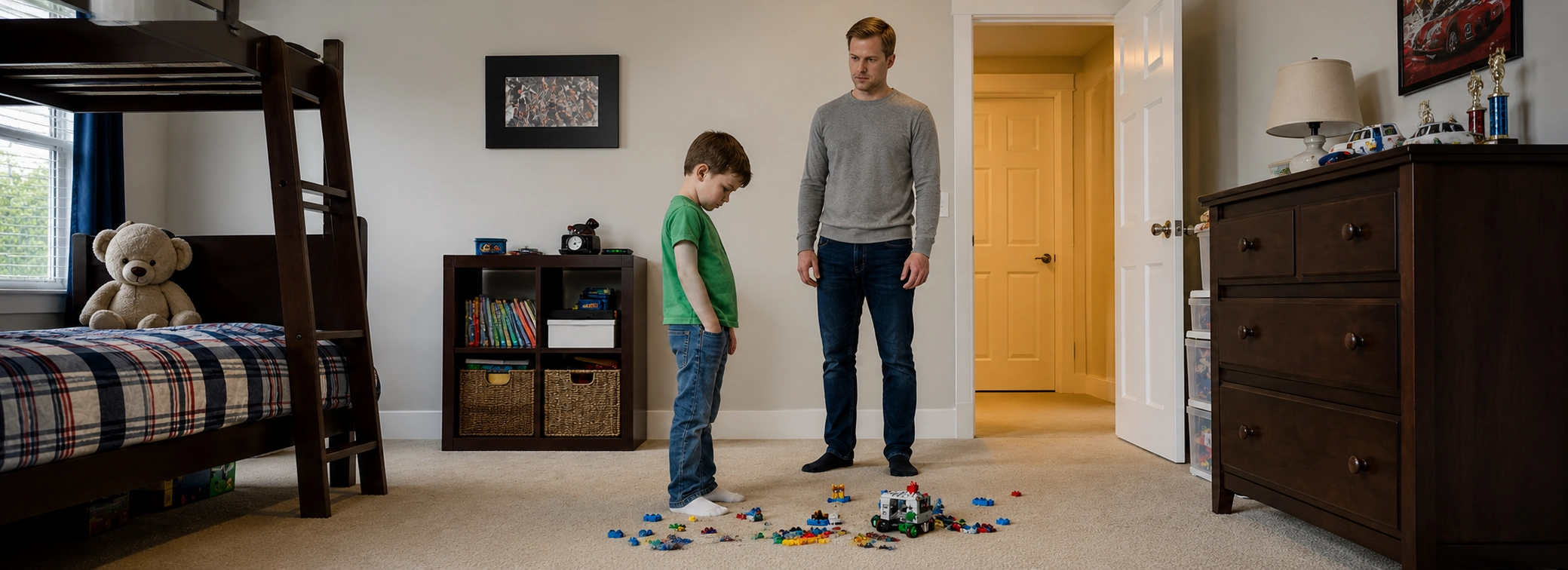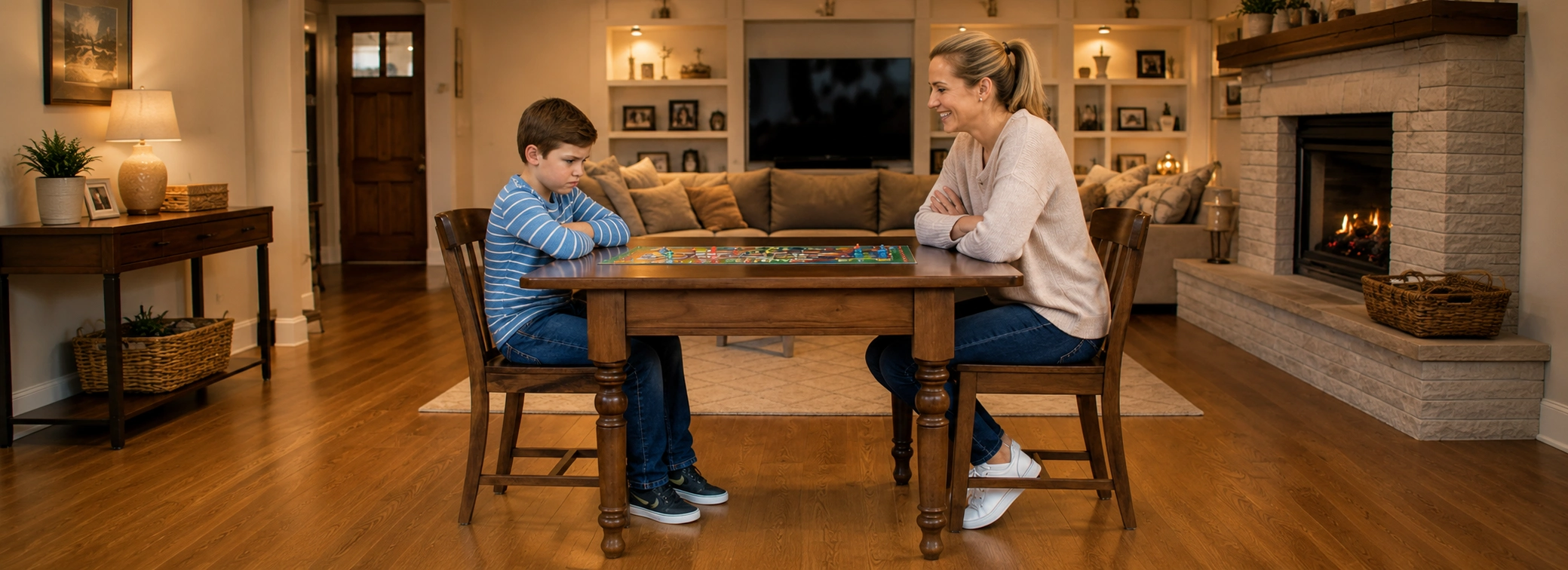
When a young child melts down over losing a board game, it isn't really about the game. Between about ages five and nine, kids are actively building their sense of who they are, and they can't yet separate 'I lost this game' from 'I am a loser.' So a loss doesn't feel like a neutral outcome; it feels like evidence about their worth. Add the fact that the brain's brake for handling disappointment is still developing, and a close loss can genuinely feel like a catastrophe. The fix isn't 'it's just a game.' It's modeling losing yourself, out loud and gracefully, and naming the feeling before you move your child along.
You're playing a simple board game on a Tuesday evening. It's supposed to be fun. But then your child loses, by one space, in the final round, and suddenly there are tears, accusations of cheating, and a shoved board. The evening is derailed. You try to explain it's just a game. It doesn't help. Because to them, it isn't just a game, and understanding why changes everything.
Why losing feels like a verdict, not an outcome
Between ages five and nine, children are actively building their sense of who they are. They watch themselves perform in the world and draw conclusions: Am I capable? Am I good at things? Am I the kind of person who wins or loses? Every success and failure feeds that picture. So losing a game doesn't land as a neutral outcome. It lands as evidence, evidence about who they are. And that is genuinely crushing, not because they're being dramatic, but because their sense of self is still fragile enough that a card-game result can feel like a statement about their worth.
Children can't yet separate 'I lost this game' from 'I am a loser.' Learning that difference is one of the biggest things that happens between five and nine, and it takes patient adults to show them.
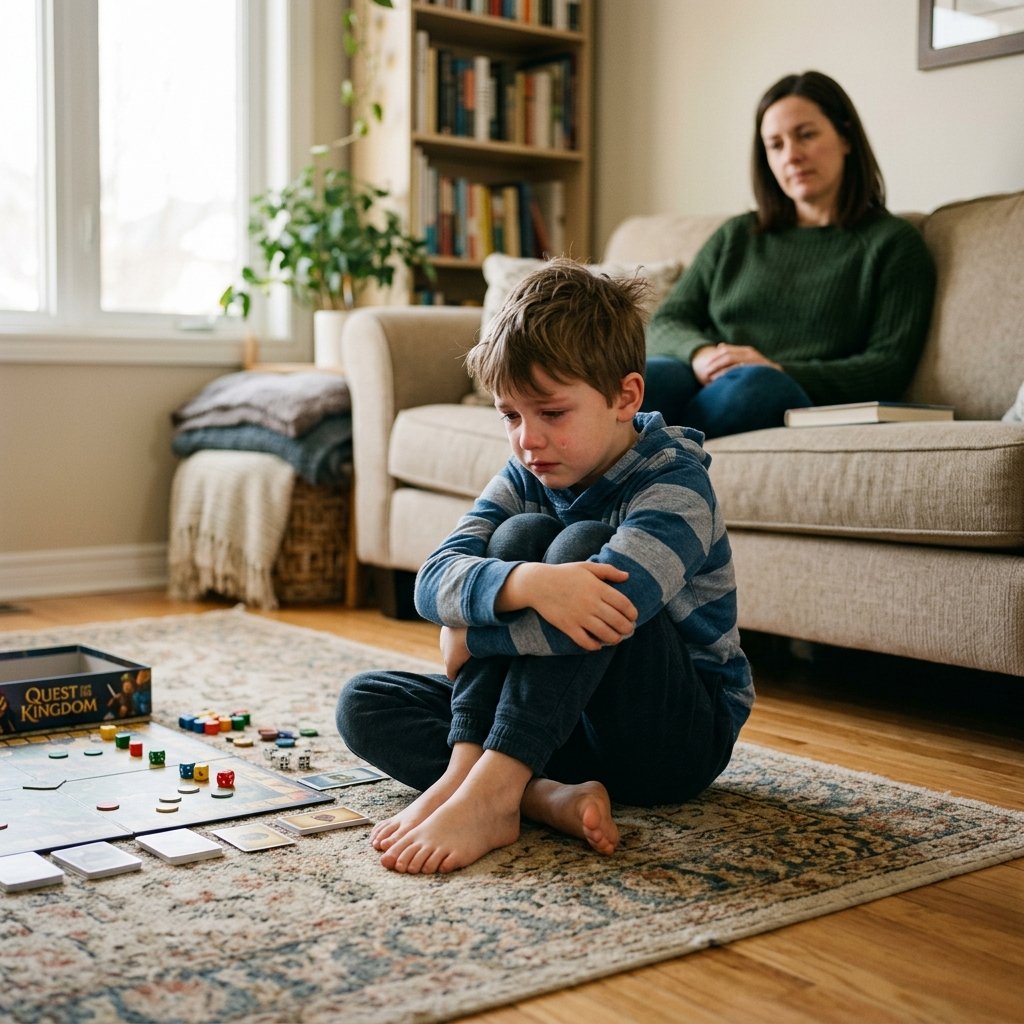 A loss doesn't feel like a neutral outcome at this age, it lands as evidence about their worth.
The age when comparison kicks in
Around age six, children become intensely aware of how they measure up to others. They start noticing who's faster, who's better at reading, who gets picked first. That new awareness makes every contest feel higher-stakes than it really is. The game becomes a competition, and competitions, at this age, feel like they matter a great deal.
Why the brake for disappointment is still being built
On top of all that, the self-control needed to sit with a big letdown is still developing. The part of the brain that lets an adult feel disappointment and manage it keeps growing across these years. So when a child loses and the feeling surges, the brake that would soften it often isn't strong enough yet. What looks like an overreaction is a real feeling meeting an unfinished stop system.
A MOMENT YOU MIGHT RECOGNIZE
Your eight-year-old is a genuinely good sport with strangers, they lose a carnival game and barely flinch. But lose to a sibling at home and the reaction is explosive. That's not inconsistency. With strangers, nothing is at stake. With siblings, everything is, love, status, worth, the family pecking order. The game is just the arena.
Help Shape the Future of Active Learning
Join our exclusive Founding Member program. Get early access to new interactive modules, direct input into our product roadmap, and lifetime pricing options.
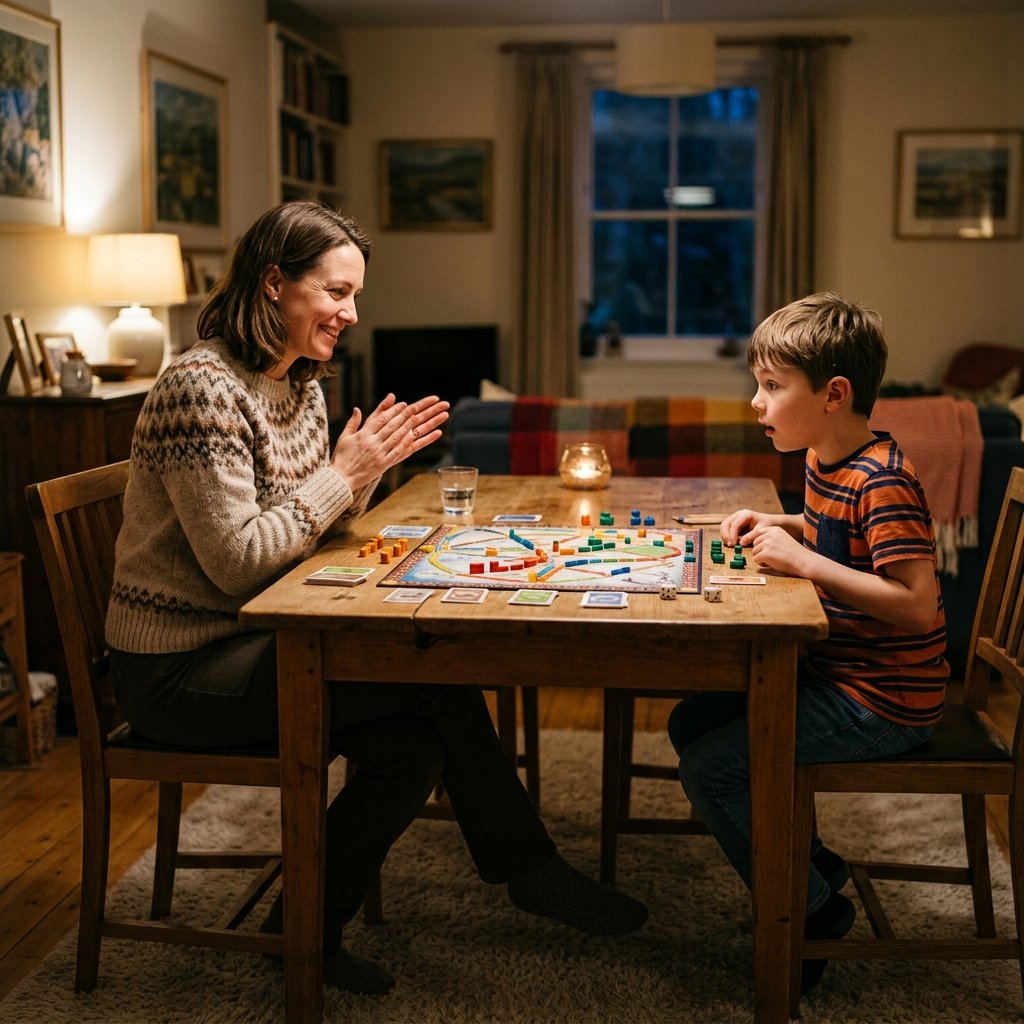 Model losing, out loud and gracefully. Over time, this is far more powerful than any rule about good sportsmanship.
What doesn't help, and what does
'It's just a game.' True, but it lands as dismissal. 'Don't be a sore loser.' This shames the child for the reaction instead of teaching a better one. 'I'll let you win next time.' This teaches the wrong lesson about what winning means.
Model losing, out loud. 'Oh, I lost! That's disappointing. Good game, though.' Show your child what handling disappointment looks like: not pretending it isn't there, but not being destroyed by it either. Over time, this is far more powerful than any rule about good sportsmanship. Acknowledge the feeling before you redirect. 'That was so close, and you really wanted to win. It makes sense that you're upset.' Then wait. And when they're calm again: 'Let's play again.'
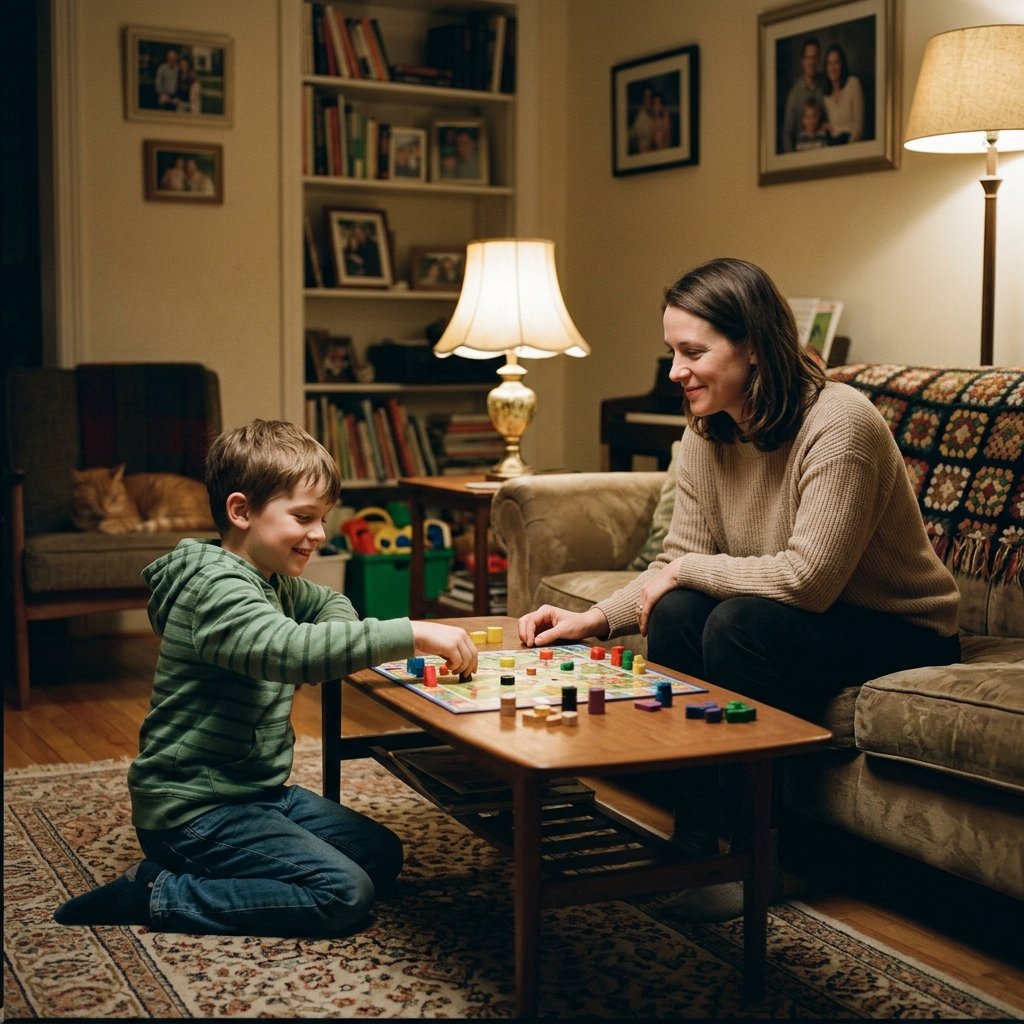 Being met in the disappointment is what slowly teaches them it's survivable.
When big reactions to losing are worth a closer look
Strong reactions to losing are normal at this age and usually ease as kids grow. It's worth checking in with your pediatrician or a child psychologist, though, if the distress is extreme and spills across many areas of life, if your child can't recover for long stretches, if they start avoiding anything they might not win at, if you hear a lot of harsh self-talk, or if your instinct says something more is going on.
Is Your Kid's Screen Time Active or Passive?
Most screens capture a kid's attention without checking their understanding. Take our 2-minute diagnostic quiz to evaluate your kid's digital patterns, identify autoplay traps, and receive actionable insights to maximize active learning.
Start Screen Time & AI QuizFOR PARENTS
AI Arena on Aiino builds confidence through challenges set to your child's level.
Resilience is built in small moments, not big lessons. Aiino's AI Arena uses quizzes and challenges genuinely calibrated to your child's level, so every round is an experience of competence, not comparison. Building confidence through the right amount of challenge is one of the most effective developmental tools there is. Built for ages 3 to 9. Zero ads. Zero tracking.
Research Citations
- [1]Self-conscious emotions like shame and pride depend on a child's developing ability to reflect on and evaluate the self, an ability still forming in early-to-middle childhood, which is why a loss can feel like a verdict on their worth (Lewis & Minar, European Journal of Developmental Psychology, 2022). View source →
- [2]The self-control needed to sit with disappointment keeps developing across the preschool and early-school years, so managing a loss genuinely costs a young child more than it costs an adult (Geeraerts et al., Child Development, 2021). View source →
- [3]A calm adult who names the feeling and stays steady helps a child move through disappointment, co-regulation that gradually builds the child's own capacity to recover (Lobo & Lunkenheimer, Developmental Psychology, 2020). View source →