A kid who hits at daycare is not an aggressive kid. They are communicating, fast, physically, with the only tool they have in the moment, something they cannot yet put into words. In kids aged about two to five, hitting is almost always a sign of an unmet need, a feeling that got too big, or a moment that outran their skills. “Be gentle” and “use your words” are not wrong, but they assume the words and the self-control are already there. In the heat of the moment, those are exactly what is missing. What actually works is building two things over time: a bigger feelings vocabulary and more self-control, through calm, repeated practice, not instruction alone.
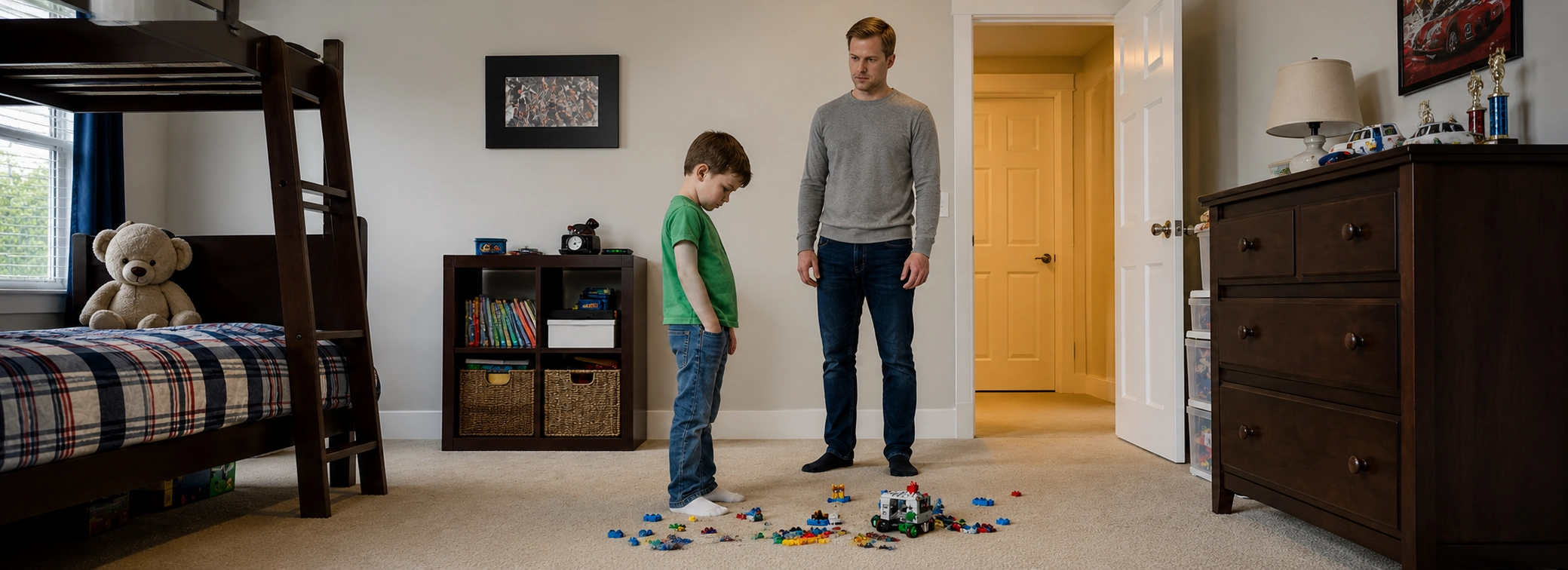
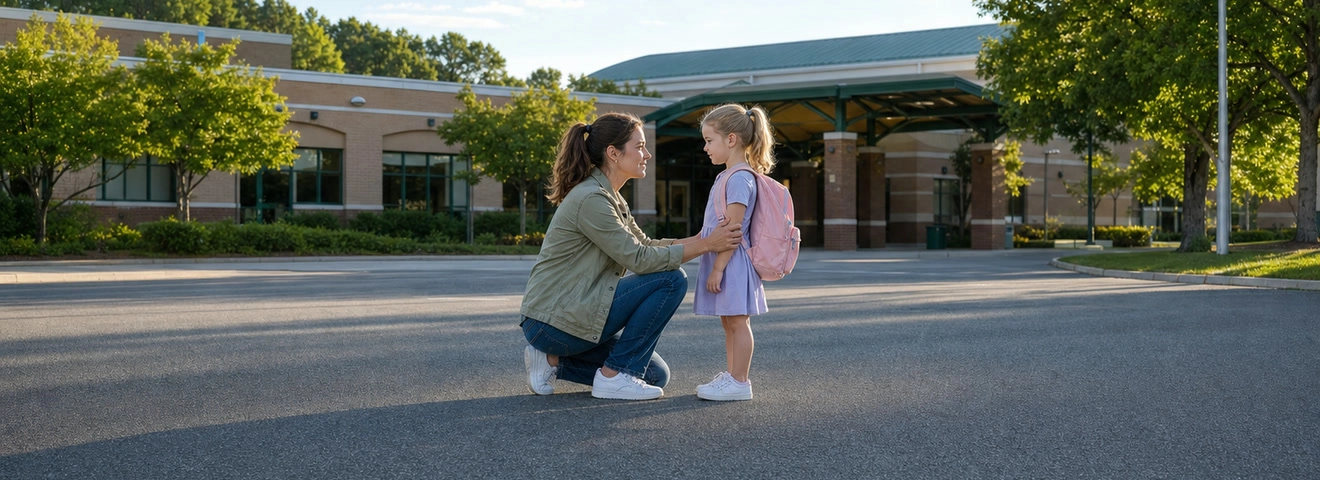
You got the report at pickup. Your kid hit another kid today. They have done it before, a few times, and now the teacher wants to talk. The feeling that arrives with that news is familiar to almost every parent: a mix of embarrassment, worry, and a quiet fear that something is wrong, with your kid, with your parenting, or with something you cannot quite name.
Here is what is actually going on, and why the path forward is different from what most parents are told.
Why young kids hit, the developmental reason
Hitting, pushing, biting, and grabbing in kids aged about two to five is driven by development, not by character. It comes from two normal facts of a young brain meeting at the same moment.
First, the feelings arrive before the words do. A young kid feels frustration, fear, or an urgent want at full volume, but does not yet have the language to say it clearly. The feeling is large. The vocabulary for it is small or missing.
Second, the brake is still being built. The “thinking” part of the brain, the part that would let an older kid feel the urge to hit and stop it in favor of words, is in its earliest stages. The impulse shows up. The system that would override it is not reliably online yet.
So the hit is what happens when the feeling is too big for the available words and the brake cannot produce the pause that would allow a different choice. It is communication, not cruelty.
A MOMENT YOU MIGHT RECOGNIZE
Your three-year-old is at the sand table. Another kid reaches for the red shovel, the one your kid was just about to grab. There is no time, no words, no plan. Their hand shoots out and pushes. By the time the teacher gets there, your kid looks as startled as everyone else. They did not decide to hit. The want was big, the words were not there, and the brake did not catch in time.
Help Shape the Future of Active Learning
Join our exclusive Founding Member program. Get early access to new interactive modules, direct input into our product roadmap, and lifetime pricing options.
What the hitting is usually trying to say
What a specific kid is “saying” depends on the moment, but the messages are remarkably consistent. “I want that, and I can’t find the words to ask for it”, common around ages two to three, when wanting an object outruns the ability to negotiate for it. “I need more space, and I can’t say so”, when another kid is too close and hitting is the way to create distance.
“I’m completely overwhelmed and I don’t know what else to do”, often in loud, busy, crowded rooms, where the load has tipped past what the kid can hold and the hit is the pressure release. And “I’m scared, and it’s coming out like this”, in kids whose response to feeling threatened is to fight rather than freeze or flee.
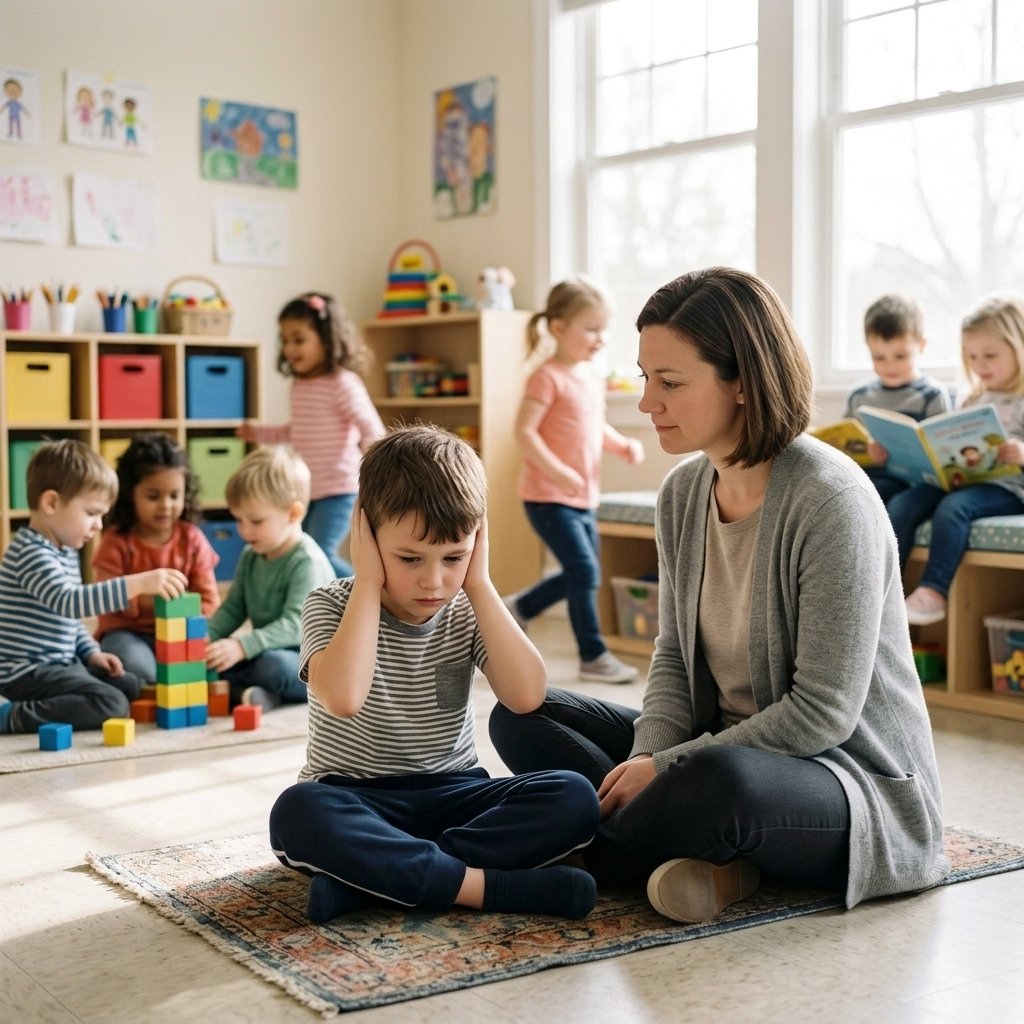 In loud, crowded rooms, the load tips past what the kid can hold, the hit is the pressure release.
Why “be gentle” and “use your words” fall short
The standard responses, “gentle hands,” “use your words,” “that hurts, say sorry”, are not wrong, and the limits behind them are appropriate. The problem is that they address the behavior without building the skill that would actually change it.
“Use your words” assumes the words are available. But for a kid in the middle of a big feeling, with the thinking brain least online and the system most overloaded, the words are precisely what is missing. The instruction is sound; it just is not reachable in that exact state.
“Telling an overwhelmed kid to “use your words” is like telling someone mid-fall to stand up straight, the skill you’re asking for is the very one that’s offline right now.”
What actually builds the skill to stop
Two things reduce hitting over time, and both build slowly. The first is emotional vocabulary. A kid who can name frustration, or say “I need space,” in calm moments can reach for those words in hard ones. That vocabulary grows through everyday exposure, stories with characters who feel big things, and adults naming feelings out loud: “I can see you’re frustrated. That’s the word for that feeling.”
The second is self-control, and it grows through co-regulation, the simple act of a calm adult helping an overwhelmed kid settle, over and over. Each calm landing is a small deposit. Across hundreds of them, the kid’s own capacity to pause and choose grows. A kid who has been helped to calm many times has more of this capacity than one who has been left to manage alone.
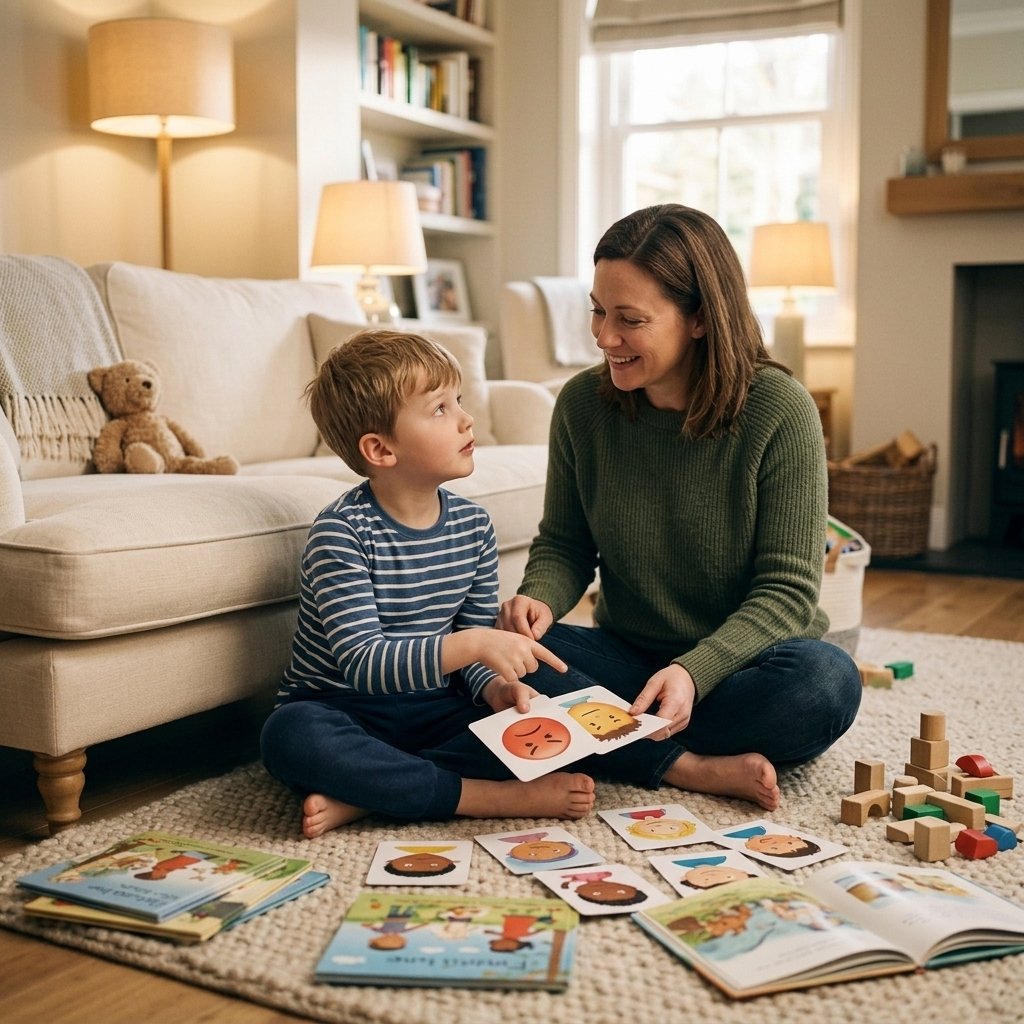 Each calm landing is a small deposit, co-regulation at home builds the brake that shows up at daycare.
Neither builds through instruction, and neither builds fast. The parent doing this patient work at home is building the very thing that changes the behavior at daycare, even though the link between the two is invisible in the moment.
What to do in the moment at daycare
In the moment, the most effective response is calm and clear, not big. Stop the hit, keep everyone safe, and hold the limit without escalating: “I won’t let you hit. Hitting hurts.” A short, steady consequence connected to the behavior, a brief step away from the activity, is appropriate. Long lectures and big punishments after the fact do little, because they pile more load onto a system that is already at capacity.
What to do at home to help
At home, focus on the two builders. Name feelings as they come up, all day long. Read stories that put words to emotions. Stay calm and close when your kid is melting down, so they get repeated practice borrowing your calm. And keep the basics steady, sleep, food, and predictable routines, because a depleted kid has far less of a brake to work with.
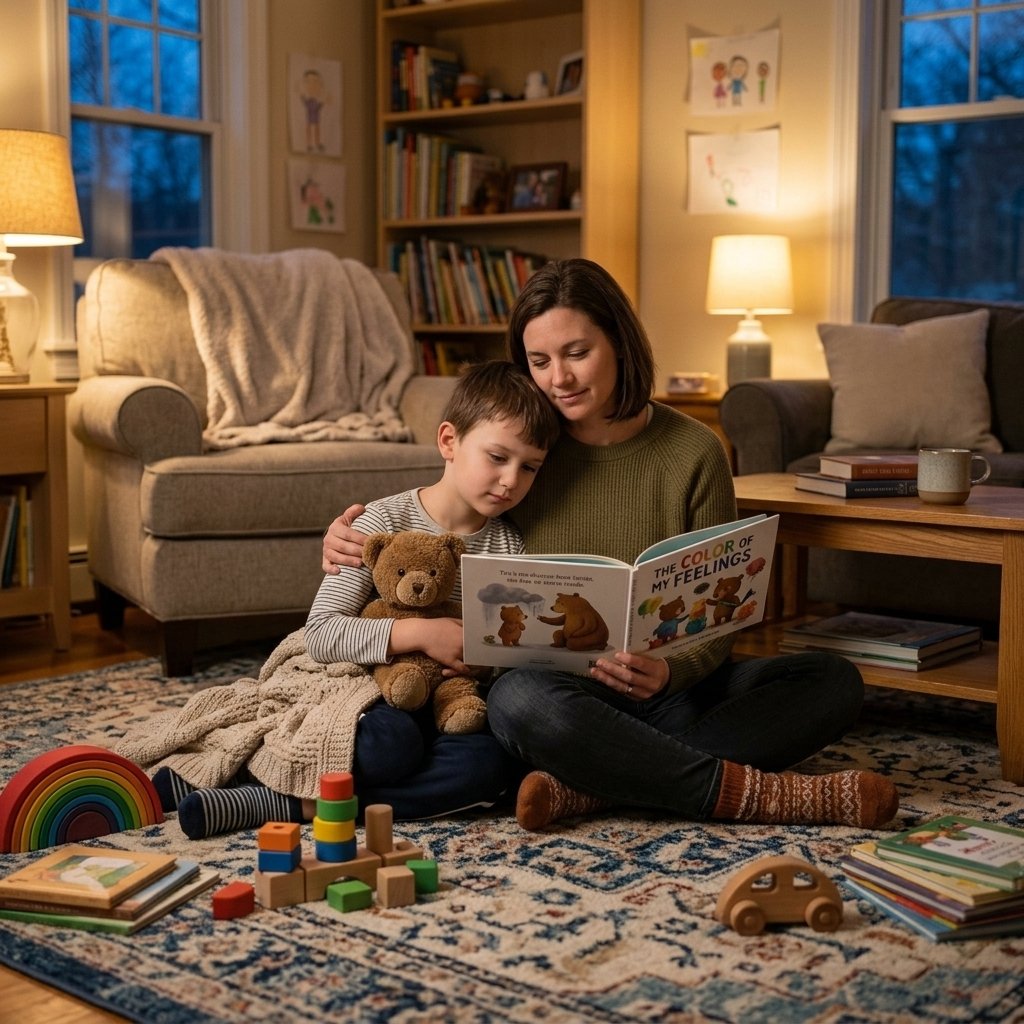 A kid who can name frustration in calm moments can reach for those words in hard ones.
When hitting is worth a closer look
By around age five or six, most kids have built enough language and self-control that hitting other kids becomes rare and keeps decreasing. Some hitting before then, especially in busy environments, is developmentally normal.
It is worth talking with your pediatrician or a child psychologist if the hitting is getting more frequent or intense as your kid gets older rather than less, if it continues to be common past age five or six, if it comes alongside other worries such as trouble making friends or frequent distress, or if your gut tells you something deeper is going on. Getting input early is not an overreaction, it brings support and a clearer plan, whatever the cause.
Is Your Kid's Screen Time Active or Passive?
Most screens capture a kid's attention without checking their understanding. Take our 2-minute diagnostic quiz to evaluate your kid's digital patterns, identify autoplay traps, and receive actionable insights to maximize active learning.
Start Screen Time & AI QuizFOR PARENTS
Interactive Stories on Aiino build the words that replace hitting.
A kid who can name frustration, or say “I need space,” in calm moments can reach for those words in hard ones. Aiino’s Interactive Stories give kids low-stakes practice naming feelings, the same vocabulary that, over time, replaces the hit. Built for ages 3 to 9. Zero ads. Zero tracking.
Research Citations
- [1]Most young kids' physical aggression declines as their self-control, attention, and vocabulary grow, the very skills that make a non-physical response possible (van Adrichem et al., Frontiers in Psychology, 2020). Frontiers in Psychology. View source →
- [2]Kids with weaker language skills are more prone to acting-out behavior, supporting the idea that words can take the place of hitting (Petersen & LeBeau, Journal of Educational Psychology, 2021). Journal of Educational Psychology. View source →
- [3]Physical aggression appears early in life and, for most kids, fades as they develop the social and verbal skills to handle conflict differently (Hay et al., Monographs of the Society for Research in Child Development, 2021). Monographs of the Society for Research in Child Development. View source →
- [4]Each time a calm adult helps an overwhelmed kid settle, it adds to the kid's growing ability to regulate on their own (Lobo & Lunkenheimer, Developmental Psychology, 2020). Developmental Psychology. View source →