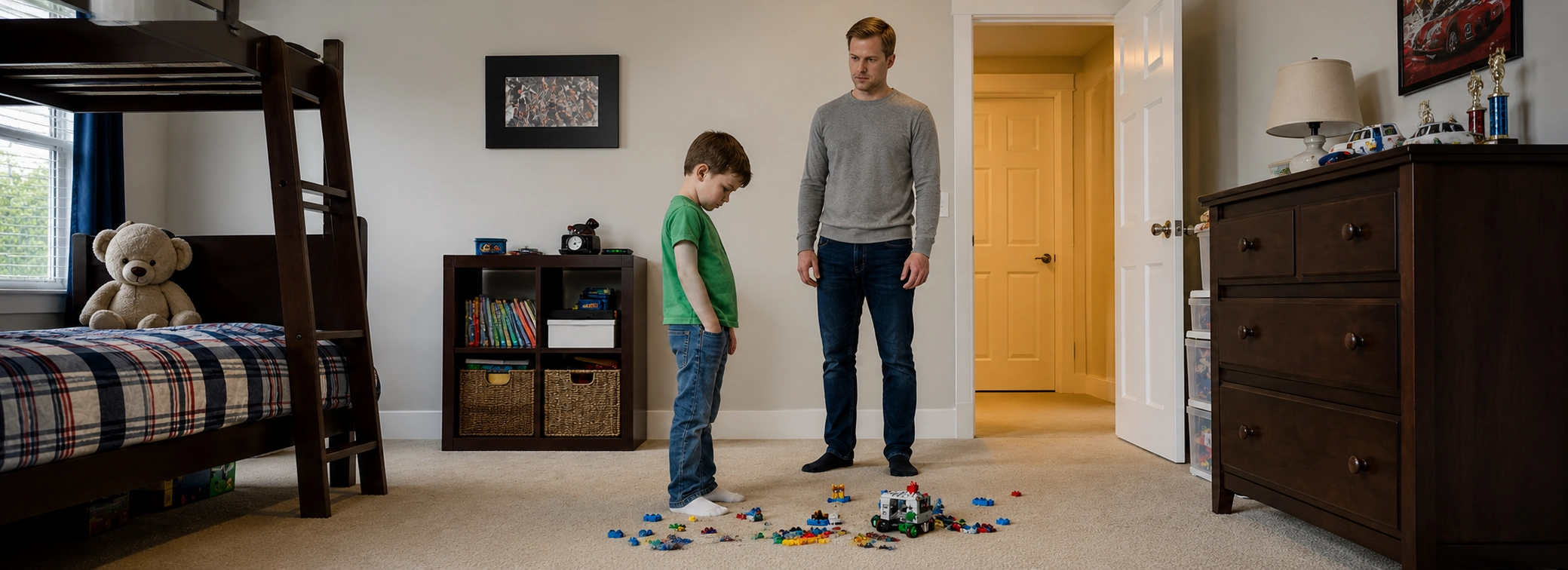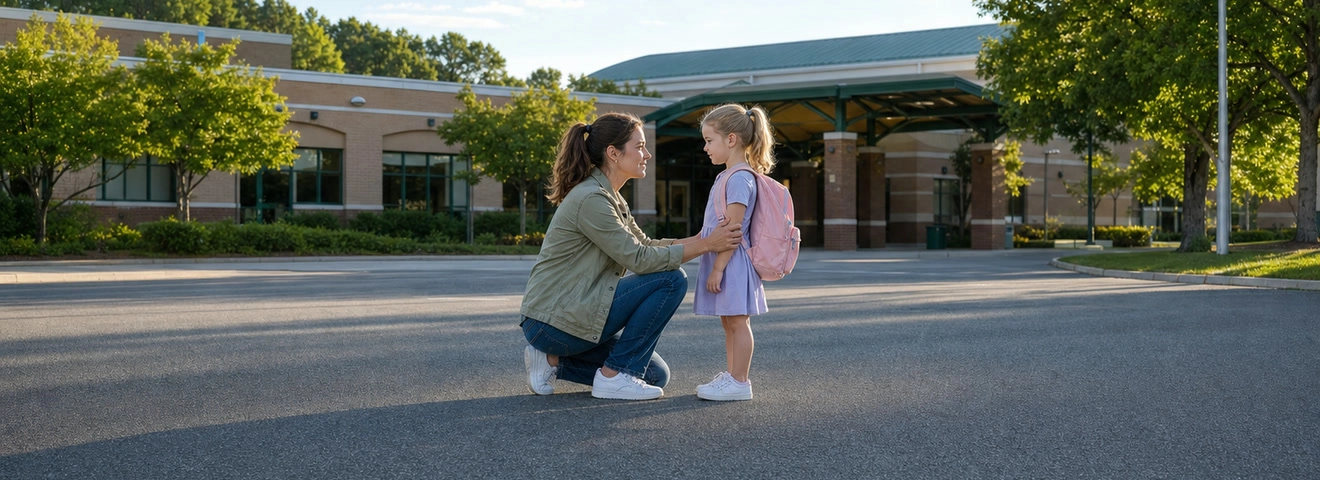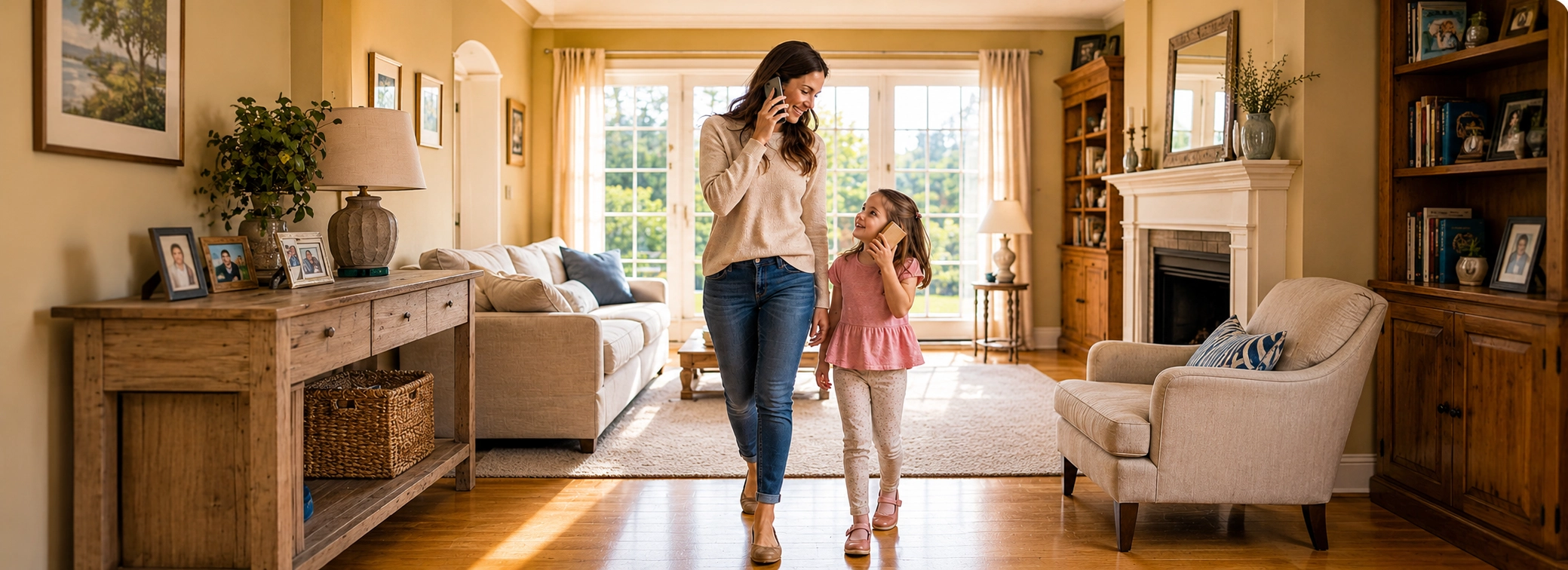
Kids are extraordinarily powerful observation machines who learn behavior, stress responses, and values by watching the adults and characters around them. They copy what they see modeled and what they see rewarded, meaning that passive screen time or contradictory parent behavior shapes them far more than explicit instructions ever will.
You're on the phone, half-listening, while your five-year-old plays nearby. A few days later, you notice her holding a block to her ear, pacing, saying "I'm very busy right now" in a voice that sounds uncannily like yours. You didn't teach her that. You didn't even know she was paying attention.
But she was. She always is. Kids between three and nine are, among other things, extraordinarily powerful observation machines. They learn not primarily by being taught, but by watching what the people and the world around them actually do.
They Don't Need to Be Taught, They Need to See
For most of human history, kids learned the essential skills of life not through formal instruction but through proximity. They watched adults work, solve problems, handle conflict, show kindness, make mistakes and recover. The watching was the learning.
This hasn't changed. What has changed is what kids now spend hours watching. And the research is consistent: kids don't just absorb information from what they observe,they absorb behavior, attitude, and approach. A kid who regularly watches someone approach a difficult problem with curiosity will develop that orientation. A kid who watches someone give up easily will absorb that too.
Kids don't learn what you tell them. They learn what they see you do,and what the world around them consistently shows them is normal.
The Rewards They See Others Get Matter
Kids are not just copying actions,they're tracking outcomes. When they see someone praised for being kind, they're more likely to be kind. When they see someone get attention through disruptive behavior, that's a lesson too. They are reading the world for information about what works,long before they can articulate that that's what they're doing.
This is why the characters kids spend time with,in stories, in games, on screens,are not trivial. The values those characters embody, the problems they face, the ways they respond, the things they get praised for: all of it becomes part of a kid's understanding of how to be in the world.
A MOMENT YOU MIGHT RECOGNISE
Your eight-year-old, without being asked, helps their younger sibling with something difficult. You ask where they learned to do that. They shrug. But three weeks ago you did something almost identical for a neighbour, and they were in the back seat of the car, watching.
 Kindness learned by watching, not by being told.
Help Shape the Future of Active Learning
Join our exclusive Founding Member program. Get early access to new interactive modules, direct input into our product roadmap, and lifetime pricing options.
Screens Are Not the Problem, Passivity Is
Screen time conversations often get stuck on quantity. How many hours? How young is too young? But for kids at this age, the more important question is what kind of engagement is happening. A kid passively watching content that requires nothing of them is a very different experience from a kid actively engaging with something that asks them to think, choose, and respond.
Passive consumption is the thing that crowds out active curiosity. It trains the mind to receive, not to engage. And for a kid whose brain is in one of its most formative periods, what that mind practises most is what it becomes good at.
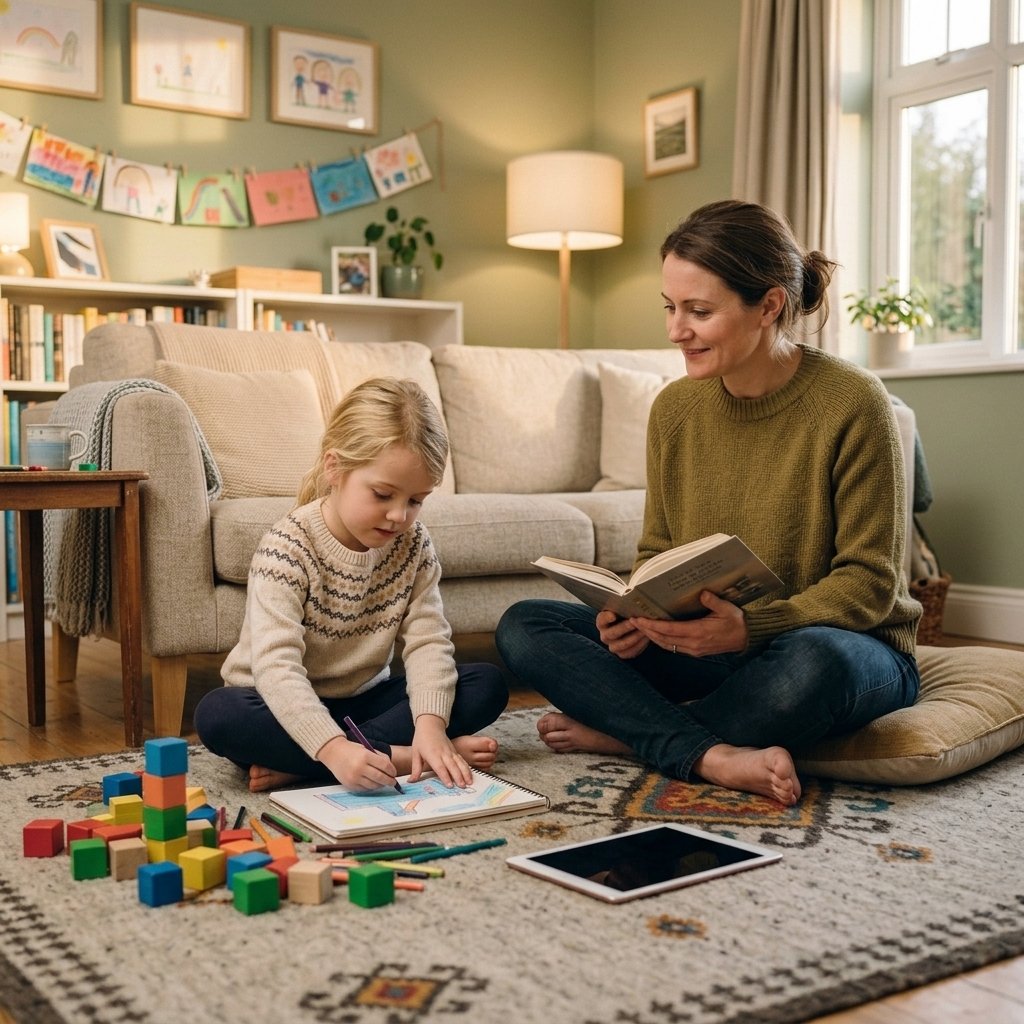 Passive watching and active creating train the mind in very different ways.
Is Your Kid's Screen Time Active or Passive?
Most screens capture a kid's attention without checking their understanding. Take our 2-minute diagnostic quiz to evaluate your kid's digital patterns, identify autoplay traps, and receive actionable insights to maximize active learning.
Start Screen Time & AI QuizWhat Kids Need to See About Technology
Kids who grow up seeing technology used thoughtfully,as a tool for discovery, for creation, for learning,develop a fundamentally different relationship with it than kids who see it used purely for entertainment or escape. The habits form early. The associations form early. What technology means to a kid is built in these years.
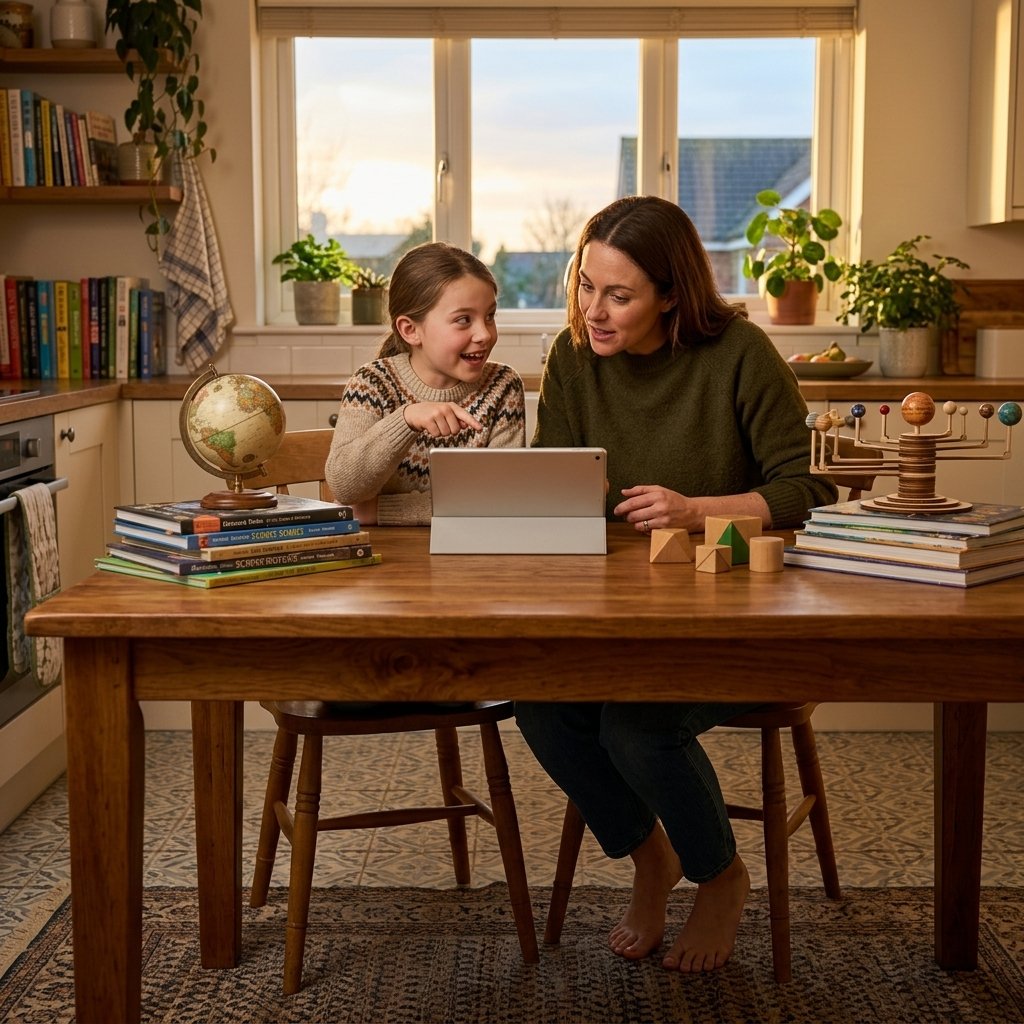 When technology is used for discovery together, kids learn a different relationship with it.
A THOUGHT FOR PARENTS
The content kids learn from shapes how they think,not just what they know.
Aiino's AI Arena exposes kids to AI concepts through videos, stories, and interactive quizzes,building the critical thinking and AI literacy that will matter most in their world. More than that, it models an approach to technology rooted in curiosity and understanding. Because kids who grow up understanding how AI works won't be replaced by it. They'll direct it.
Explore AI Arena at aiino.ai
You model more than you know. The way you approach a problem, handle frustration, speak about learning, engage with technology,all of it is curriculum. The question isn't whether your kid is learning from what they observe. They always are. The question is what they're seeing.