Quick Answer
Kids break things when they’re angry because a big feeling needs somewhere to go, and their body finds an exit before their brain can stop it. In young kids the link between a feeling and an action is fast and direct, and the part of the brain that puts on the brakes is still being built. Throwing or slamming releases pressure, which is why it can feel good in the moment even when they regret it right after. Most kids do this at some point and grow out of it. What helps is staying calm, repairing together afterward, and teaching a safe outlet while they are calm.
The crash from the other room
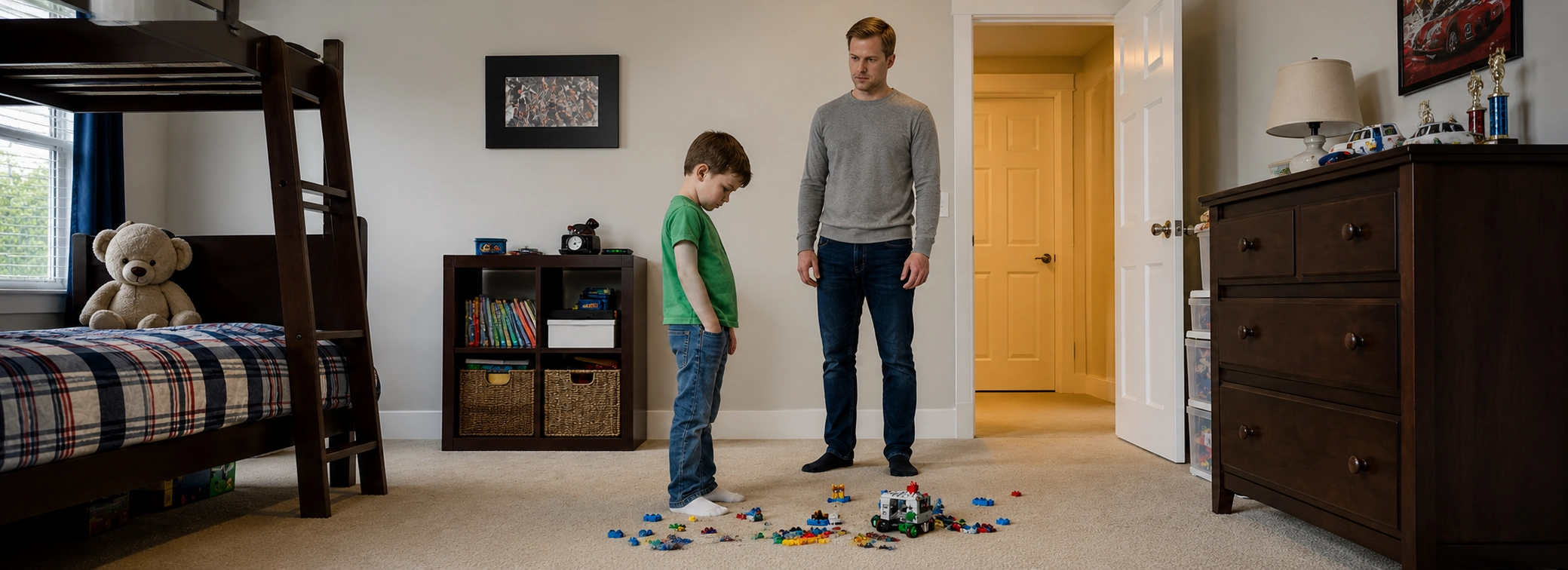
There is a crash from the other room. By the time an adult gets there, something is broken — a toy, a block tower, a drawing that mattered a great deal two minutes ago. The kid is furious, breathing hard, standing over the wreck. And the adult is left wondering how it happened so fast, and what it says about the kid in front of them. The short version: less than it feels like.
A broken object in the wake of an angry outburst feels alarming, and it is easy to read it as a sign of a destructive streak. But for most young kids, breaking something in anger is not about destruction at all. It is about a feeling that had nowhere else to go.
When a feeling turns into an action
At its core, breaking something when angry is the same impulse as hitting — the body discharging a feeling that has built up with no other exit. In young kids especially, the path from an inner feeling to a physical action is short and fast. The feeling gets too big to hold, something has to happen, and something does. Throwing a toy, slamming a door, ripping a page — these are physically satisfying to a flooded system. They release pressure and make the outside match the chaos inside. That does not make them okay. But it does make them understandable.
“A kid who breaks things when angry is not a destructive kid. They are a kid with a feeling too big for their body and no better exit yet.”
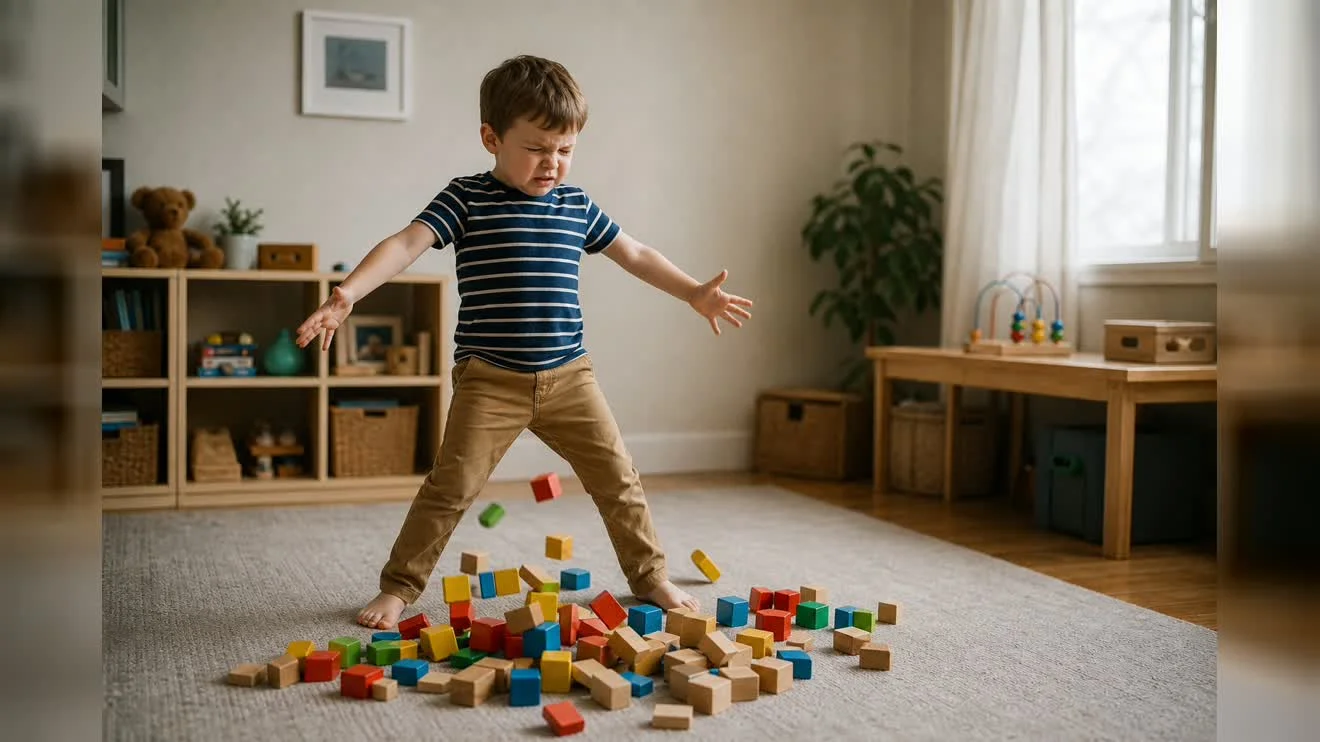 Throwing or slamming is physically satisfying to a flooded system. It releases pressure and makes the outside match the chaos inside.
Why the brake comes too late
The reason the hand moves before the kid can stop it is that the brain’s brake — the part that pauses an impulse and asks “wait, should I?” — is still being built and keeps developing for years. So the action arrives before the thought. This is exactly why genuine regret so often shows up a second or two later: the feeling fired, the body acted, and only then did the slower thinking part catch up. Closing that gap, between the act and the regret, is one of the things that happens gradually with age.
A MOMENT YOU MIGHT RECOGNIZE
A five-year-old, fighting with a Lego build that will not click together, hurls the whole thing across the room. It is genuinely startling. But watch what happens next: their face falls. They look horrified at what they just did. The regret is real — it just showed up half a second too late. That gap, between the act and the regret, is precisely the thing that slowly closes as they grow.
Help Shape the Future of Active Learning
Join our exclusive Founding Member program. Get early access to new interactive modules, direct input into our product roadmap, and lifetime pricing options.
What is normal and what is worth watching
Most kids between about three and seven will, at some point, throw or break something in anger. Research that tracks physical outbursts across early childhood finds that this kind of behavior is common, peaks early, and then drops off steeply for the large majority of kids as their language and self-control catch up. In other words. It is frustrating to live with but well within the normal range.
It is more worth looking into when the pattern stands out: when it happens very often and very intensely, when a kid deliberately destroys things that belong to other people rather than their own, when it includes aggression aimed at people, or when it keeps growing past age seven instead of fading. A small number of kids stay on a higher path and benefit from extra support, so in those cases it is worth exploring what the behavior is signaling rather than waiting it out.
Why staying calm beats matching their heat
In the moment, the strongest instinct is to meet the outburst with force — a raised voice, a big punishment. But adding heat to a brain that is already on fire only makes the fire bigger. The more useful move is to match the energy you want the kid to reach, not the energy they are at: calm, low, and present. A steady adult beside a flooded kid helps the kid come down, the same way panic in the adult would send them higher.
“Meeting a kid’s storm with your own storm just makes a bigger storm. Your calm is the thing that brings the weather down.”
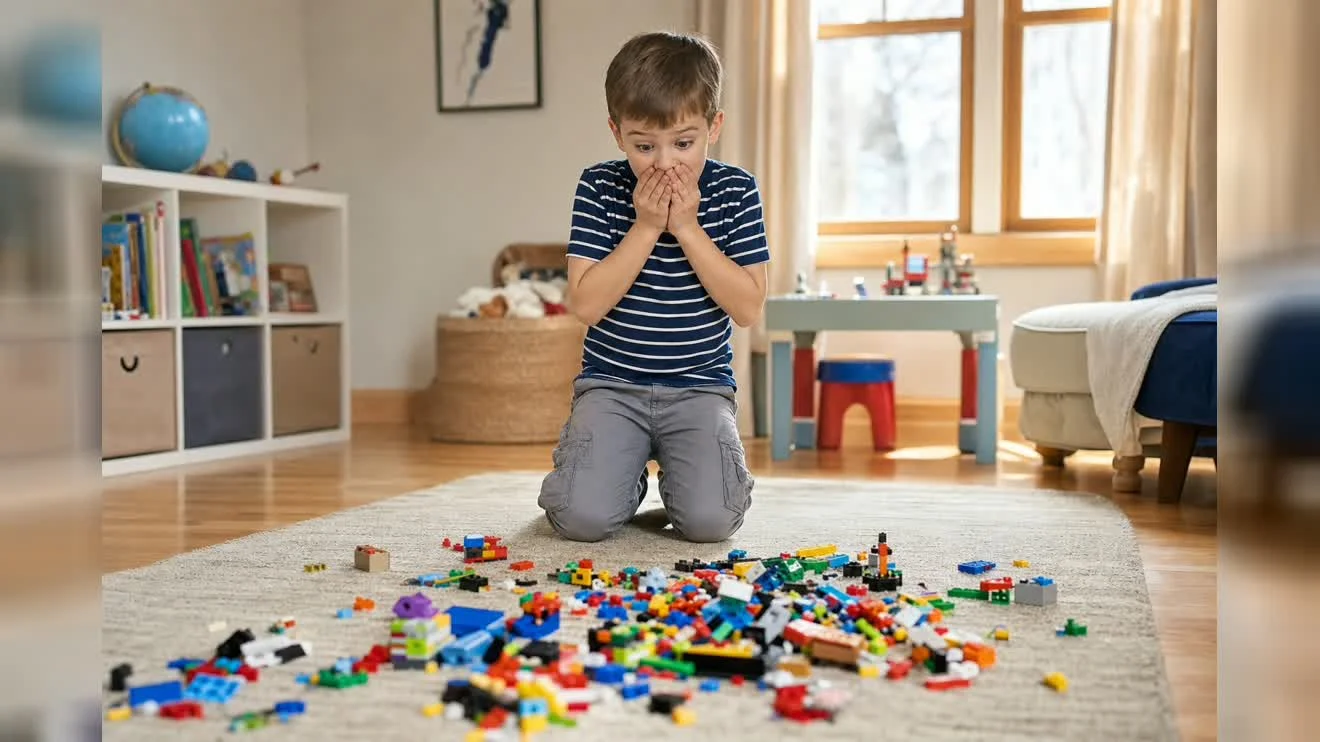 The feeling fired, the body acted, and only then did the slower thinking part catch up. Genuine regret often shows up a second or two later.
Repair, do not just punish
The real teaching happens after the storm, not during it. Once everyone is calm, fix the situation together: “Something got broken when you were angry. What should we do about that?” This is not a soft option and it is not a punishment — it is teaching consequence and repair, which is the actual lesson. Cleaning up together, making amends, figuring out the next step: that sticks far better than a shaming lecture, and it does it without teaching the kid that they are bad.
A MOMENT YOU MIGHT RECOGNIZE
Once everyone is calm, the adult does not lecture. They hand over a dustpan and say, “Okay. Something got broken. Let’s clean it up together and figure out what to do.” The kid helps sweep. It is not a punishment and it is not a free pass — it is the quiet lesson that when you break something. You help make it right.
Is Your Kid's Screen Time Active or Passive?
Most screens capture a kid's attention without checking their understanding. Take our 2-minute diagnostic quiz to evaluate your kid's digital patterns, identify autoplay traps, and receive actionable insights to maximize active learning.
Start Screen Time & AI Quiz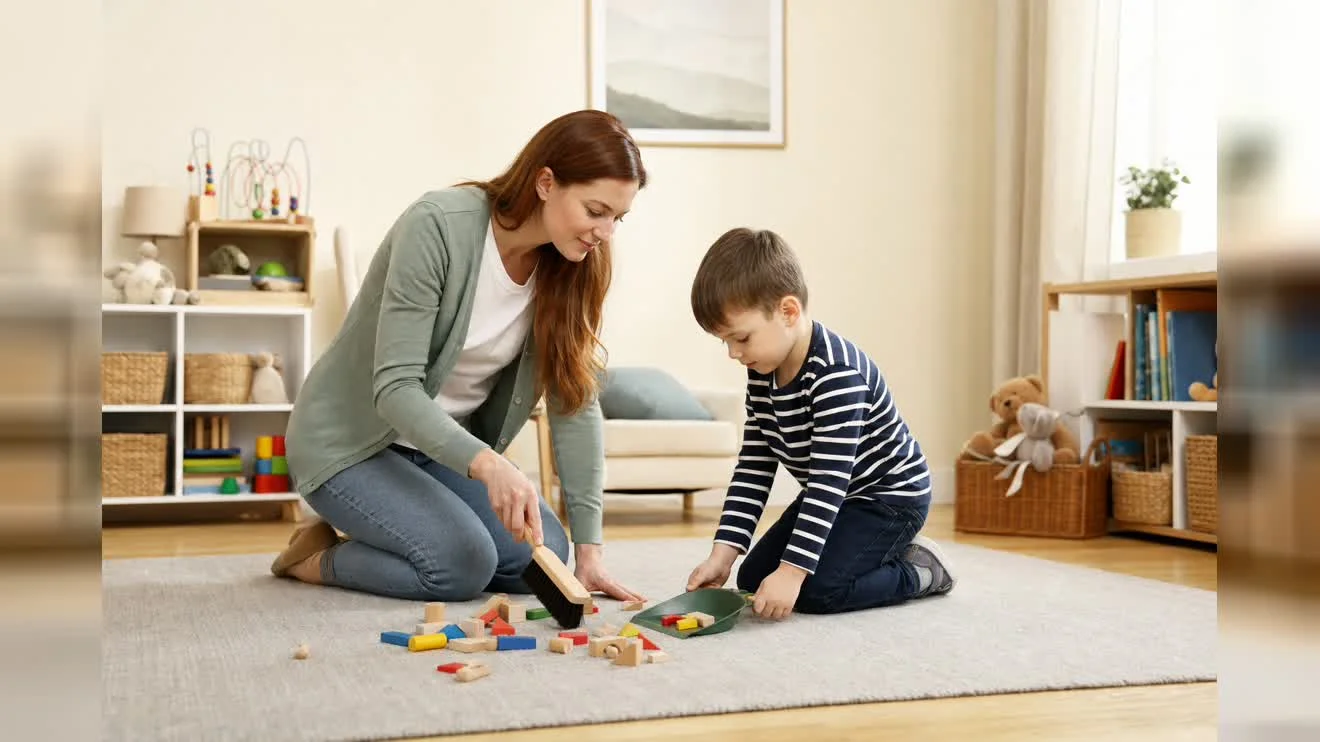 Once everyone is calm, fix the situation together. It is not a punishment, it is teaching consequence and repair.
Build a better exit before the next storm
The long game is giving the feeling a safer place to go. Offer a physical outlet that is satisfying enough to compete with breaking something — squeezing a pillow as hard as they can, stomping, pushing against a wall, running outside. Two things make it work. It has to be genuinely physical, because the body is looking for a release. And it has to be practiced when the kid is calm, not introduced mid-meltdown, because no one learns a brand-new strategy while their brain is flooded. Rehearse it on a good day, and it is available on a bad one.
The skill hiding underneath
The goal was never a kid who stops feeling furious — anger is not the problem. The goal is a kid who, over years, builds a small pause between the feeling and the hand. Breaking things is an early, loud version of a skill that is still under construction. Treated calmly, with repair instead of shame and a better exit practiced on the side, that skill quietly grows in. The broken toy is a symptom, not a character trait — so handle the symptom calmly and invest in the skill underneath it.
Research Citations
- [1]Physical outbursts in early childhood are common, peak early, and decline steeply for the large majority of kids as they grow; only a small group stays on a higher path (developmental trajectories study, 2023). View source →
- [2]The prefrontal cortex — the brain’s “brake” for shrinking and managing emotional reactions — develops slowly into the mid-twenties (Fombouchet et al., 2023). View source →
- [3]Co-regulation — a calm caregiver helping a kid settle — is how kids gradually build their own self-regulation (Calming Together study, 2025). View source →
- [4]Helping adults notice, name and validate kids’s feelings improves kids’s emotional skills (systematic review and meta-analysis, 2023). View source →
- [5]A dismissing response to kids’s emotions is linked with more emotional problems and poorer emotion regulation (parent emotion-socialization profiles study, 2023). View source →
FOR PARENTS
Handling big feelings is a learned skill — and stories are one of the best classrooms.
Aiino’s Interactive Stories put kids alongside characters who hit explosive feelings and have to choose what to do next. Working through those choices in a story builds real pathways for handling them in life. It is not a substitute for a calm adult — but it is a powerful addition.